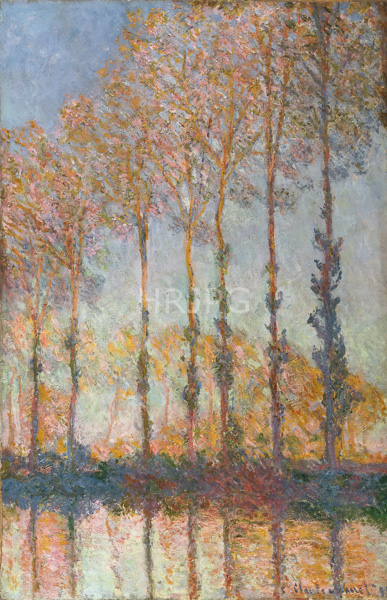
The visual logic of the painting is defined by its extraordinary structural rhythm and decorative quality. The towering, slender trunks of the poplars provide a series of vertical accents that cut across the horizontal planes of the river and the sky. Monet utilizes a sophisticated 'S-curve' composition to lead the viewer’s eye through the depth of the landscape. The palette is dominated by vibrant oranges, deep purples, and soft ochres, all unified by the shimmering golden light of the setting sun. The foliage is rendered with short, rhythmic dabs of color that suggest the rustling of the leaves in the river breeze. The water in the foreground is a masterclass in reflection; the mirror-image of the trees is captured with horizontal strokes that suggest the transparency and movement of the Epte.
Technically, Poplars on the Bank of the Epte showcases Monet’s mastery of the 'envelope' of light. He worked on multiple canvases simultaneously, moving from one to another as the light changed throughout the evening. He avoids hard outlines, relying instead on the juxtaposition of different color values to define the forms of the trees and the riverbank. This focus on the optical truth of a single moment was a radical innovation, proving that even a simple row of trees could be a subject of monumental beauty. Historically, the Poplar series was a critical success, solidifying Monet's reputation as the preeminent landscape painter of his generation. Today, held in major institutions like the Tate Modern and the Philadelphia Museum of Art, the painting remains a beloved icon of modern art, celebrating the perfect harmony between the artist’s eye and the environment he sought to protect and record.