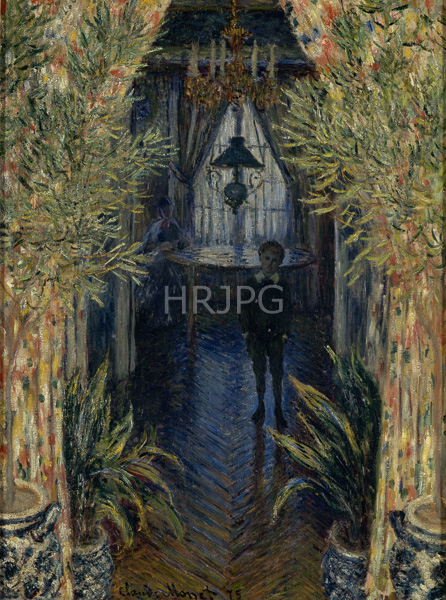
The visual logic of the painting is defined by the extraordinary play of light as it enters the room and illuminates the various surfaces. Monet utilizes a palette dominated by deep indigos, warm ochres, and muted grays to represent the interior environment. The large, dark green leaves of the plants provide a strong structural framework that anchors the composition, leading the eye toward the distant figures. The window acts as a primary source of light, its brilliance softened by curtains to create a hazy, atmospheric 'envelope' of air within the room. He avoids hard outlines, relying instead on the juxtaposition of tonal values to define the forms and the depth of the space. This focus on the sensory 'impression' of the domestic light—the way it catches the edges of a leaf or the pattern of a carpet—was a radical innovation in interior painting.
Technically, Apartment Interior showcases Monet’s mastery of texture and tonal harmony. He used a confident application of paint to build up the surface of the floor and the foliage, giving the room a tangible presence. He avoids the use of black, using deep blues and purples in the shadows to maintain a consistent luminosity throughout. This chromatic approach ensures that the painting feels alive and breathing, capturing the 'instantaneity' of the light before the sun shifted. Historically, this work represents the stability and peace of Monet's early years in Argenteuil, reflecting the domestic prosperity that would soon be challenged by financial struggle and tragedy.
Today, held in the collection of the Musée d'Orsay, the painting is admired for its formal strength and its evocative mood. It serves as a vital document of Monet's creative process, illustrating the bridge between the social realism of his early career and the atmospheric investigations of his mature style. For the viewer, the painting offers a vision of timeless domestic peace, capturing the essence of a quiet afternoon with a technical brilliance and emotional resonance that remains as vibrant today as it was in 1875. It is a masterpiece of light and shadow, reminding us that for Monet, every space offered a new opportunity to explore the infinite complexities of the visual world.