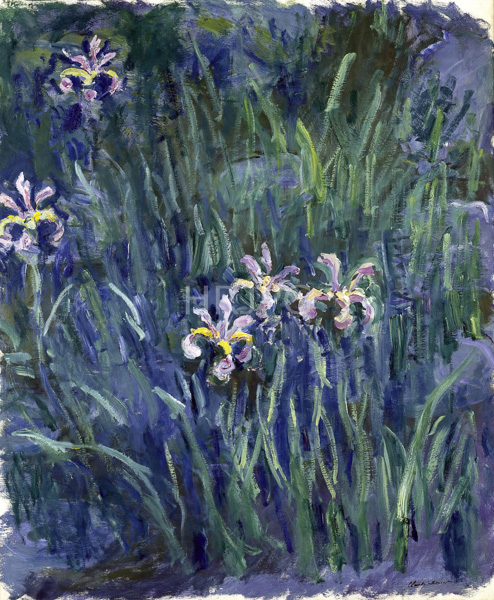
The visual center of the painting is the extraordinary verticality of the irises and the brilliant contrast between their deep purples and the lush, emerald greens of the foliage. Monet utilizes a rich and varied palette of deep mauves, vibrant blues, and fiery ochres, creating a vibrating surface that mimics the sensory experience of a sun-drenched garden. The brushwork is exceptionally free and gestural; he uses long, sweeping strokes to suggest the elegant curves of the petals and the upward growth of the stems. There is no traditional background or perspective; the viewer is plunged directly into the flowers, experiencing the landscape as a total, all-encompassing environment. This 'plunging' view prefigures the radical abstraction of his late Water Lilies series, where the distinction between the subject and the medium of paint begins to disappear.
Technically, Irises showcases Monet’s mastery of 'all-over' texture and chromatic vibration. He applied the paint in thick, gestural layers of impasto, creating a surface that has a physical presence of its own. He avoids the use of black, using deep blues and purples to represent the shadows within the foliage, ensuring that the painting maintains a high-keyed luminosity even in its darker areas. The 'envelope' of light is palpable; the way the sunlight catches the edges of the petals suggests a warm afternoon in Giverny. Historically, these late iris paintings were long misunderstood as the result of his failing vision, but they were later rediscovered as the true precursors to modern abstract art. Today, held in major collections such as the National Gallery in London and the Musée Marmottan Monet, the painting is admired for its raw power and its profound lyrical beauty. It remains a moving testament to Monet’s unrelenting creative spirit and his ability to find a universal language for the beauty of nature.