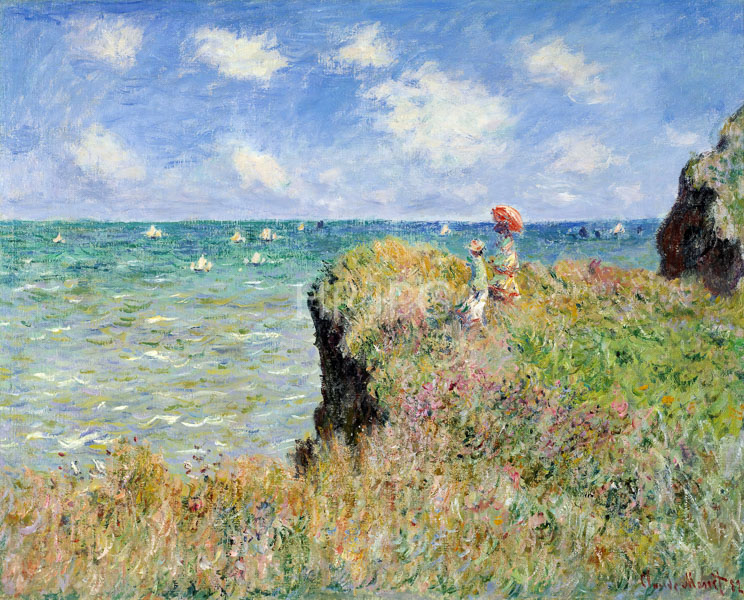
The visual center of the painting is the expansive, undulating surface of the cliff-top meadow, which leads the eye toward the figures and the dizzying drop to the sea below. Monet utilizes a lush and varied palette of vibrant greens, soft violets, and pale yellows to suggest the wind-swept grasses. The sea in the background is rendered as a shimmering expanse of turquoise and cobalt, reflecting the brilliant, high-keyed light of a summer afternoon. The two figures provide a sense of scale and a rhythmic focal point, their wind-whipped dresses and the diagonal of their movement echoing the energy of the coastal breeze. The light is the primary actor, raking across the cliff and creating deep, chromatic shadows filled with cool purples and blues. There is no use of black; instead, form is suggested through the juxtaposition of warm and cool tones.
Technically, Walk on the Cliff at Pourville showcases Monet’s mastery of 'all-over' texture and the rejection of traditional perspective. He used a high-angled viewpoint that focuses the viewer’s attention on the surface of the land and water. The brushwork is exceptionally free and gestural; he uses short, staccato strokes for the grass and broader, horizontal marks for the sea, creating a vibrating surface that mimics the sensory experience of standing on the shoreline. Historically, the Pourville series represents the beginning of his systematic series practice. Today, held in the Art Institute of Chicago, the painting remains a beloved example of high Impressionism, celebrating the beauty of the present moment with unmatched honesty and passion. It illustrates the perfect union between the artist’s revolutionary eye and the natural world he sought to record.