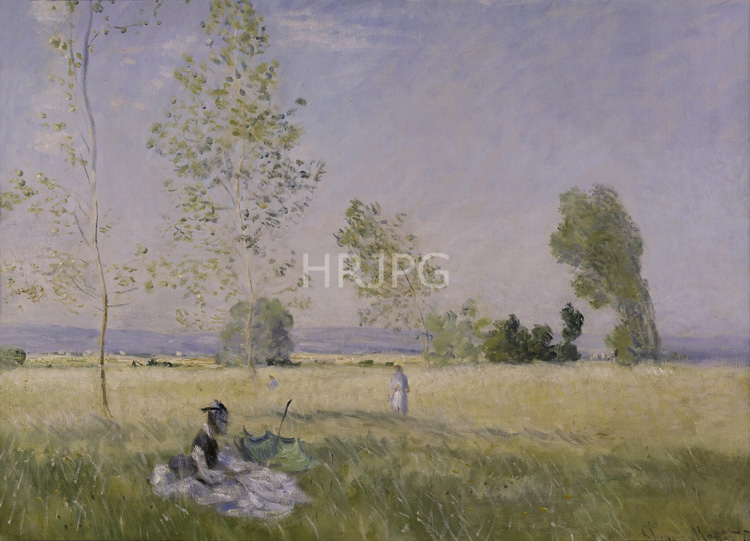
The visual impact is achieved through the extraordinary contrast between the vibrant red poppies, the lush greens of the grass, and the brilliant white of Camille’s dress. Monet utilizes the optical principle of complementary colors to create a sense of shimmering intensity; the red dabs of paint seem to flicker as the eye moves across the field. The figures are integrated into the landscape as optical elements, subject to the same laws of light and atmosphere as the trees. The parasol acts as a structural anchor and a device to create complex shadows filled with cool purples and blues rather than traditional black. The light is the primary actor, raking across the field and creating a shimmering 'envelope' of warm air that unifies the entire scene, making it feel fresh, immediate, and full of life.
Technically, Summer showcases Monet’s mastery of 'broken color' and his rejection of traditional detail. He uses short, rhythmic strokes for the flowers and foliage, creating a textured surface that has a physical presence of its own. The sky is a masterclass in atmospheric light, with pale blues and soft clouds suggesting a warm, breezy day. Historically, this work reflects the post-war optimism of the early 1870s in France, celebrating the beauty of the suburban countryside. Today, held in major collections such as the National Gallery in Berlin, the painting remains a universal symbol of the beauty of nature and the innocence of the present moment. It serves as a vital document of Monet's creative process and his deep emotional connection to his family and the land, capturing the essence of the French summer with a technical brilliance and emotional resonance that has not faded.