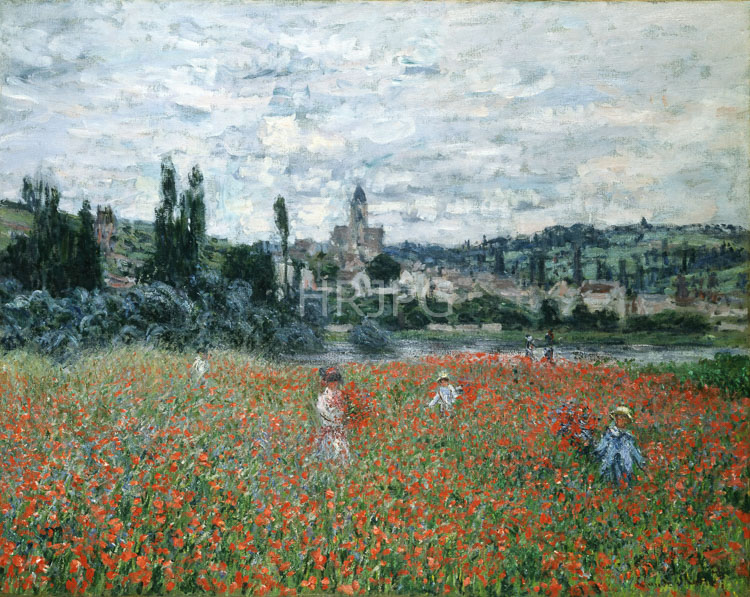
The visual impact is achieved through the extraordinary contrast between the red poppies and the lush, varied greens of the grass. Monet utilizes the principle of complementary colors to create a sense of optical vibration; the red dabs of paint seem to flicker as the eye moves across the field. Unlike the 1873 version, this painting often eliminates or subordinates human presence, focusing entirely on the landscape as an immersive field of light. The brushwork is rhythmic and gestural, with short strokes used for the blossoms and longer marks for the meadow. The sky is a masterclass in Impressionist light, with pale blues and soft clouds suggesting a warm, breezy day. The light rakes across the field, creating subtle tonal shifts that define the contours of the land and a shimmering 'envelope' of air that unifies the entire scene.
Technically, Poppy Field near Vetheuil showcases Monet’s mastery of 'all-over' color harmony and the rejection of traditional perspective. He avoids the use of black, using deep blues and purples in the shadows to maintain a high-keyed luminosity. This ensures the painting feels alive and breathing, capturing the 'instantaneity' of the light before the sun shifted. Historically, the works of 1879 represent a shift toward a more introspective landscape practice. Today, held in major collections like the Metropolitan Museum of Art and the Foundation Bührle, the painting is admired for its lyrical beauty and technical virtuosity. It remains a moving testament to Monet’s resilience and his unrelenting quest to find universal beauty in the local environment, illustrating the perfect union between his revolutionary eye and the natural world.