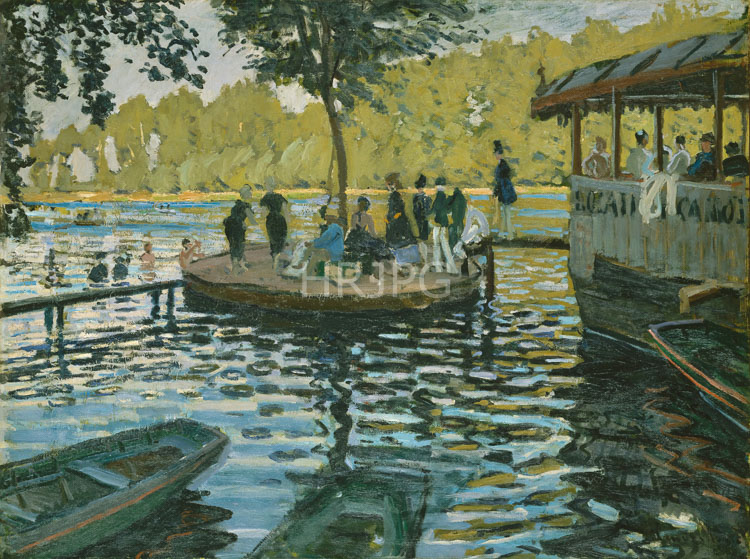
The true protagonist of the painting is the water of the Seine. Monet utilizes bold, horizontal slashes of pure white, azure, and dark green to represent the reflections of the sky and the bathers on the choppy surface. This 'shorthand' for water was revolutionary; rather than blending colors, Monet leaves the brushstrokes visible, allowing the viewer's eye to perform the 'optical mixing' that creates a sense of shimmering, vibrant light. The figures on the island are rendered with a characteristic Impressionist shorthand, their forms suggested by quick, gestural strokes that capture their movement. He avoids the use of black in the shadows, opting for deep indigos and cool greens to maintain a high-keyed luminosity throughout the scene.
Technically, La Grenouillere showcases Monet’s early interest in the material quality of paint and the rejection of traditional chiaroscuro. The composition is dynamic and immersive, leading the eye into the middle ground where the social activity is concentrated. Historically, this work represents the moment when the visual vocabulary of Impressionism was forged, focusing on the 'heroism of modern life' through the lens of popular recreation. Today, versions of this scene are held in the Metropolitan Museum of Art and the National Gallery in London. It remains one of the most significant works in art history, reminding us of the revolutionary spirit that sought to record the beauty of the world exactly as it was perceived in a single, fleeting instant of light and joy.