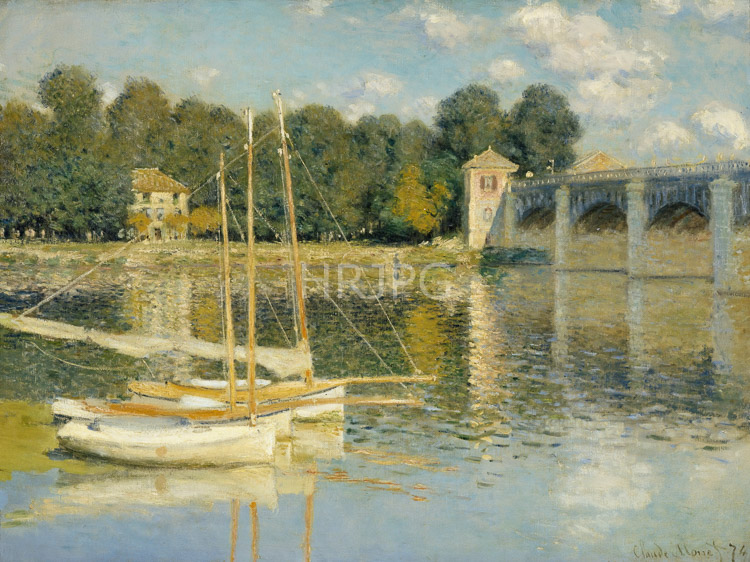
The visual logic of the painting is defined by the extraordinary clarity of the light and the rhythmic reflections of the bridge in the water. Monet utilizes a vibrant and saturated palette of azure blues, brilliant whites, and warm ochres. The bridge itself, with its geometric arches and wooden structure, provides a strong horizontal and vertical framework for the composition. The water in the foreground is a masterclass in Impressionist technique; Monet uses short, horizontal slashes of pure color to represent the flickering reflections of the sky and the bridge. These strokes are not blended, allowing the viewer’s eye to perform the 'optical mixing' that creates a sense of sparkling, moving light. The presence of the small sailboats adds a sense of leisure and modern energy to the scene.
Technically, The Bridge at Argenteuil showcases Monet’s mastery of 'all-over' texture and the rejection of traditional perspective. He avoids the use of black entirely, opting for deep indigos and cool greens to suggest the shadows beneath the bridge. This ensures that the painting maintains a consistent luminosity across the entire surface. The 'envelope' of warm, dry air is palpable; the way the atmosphere softens the distant trees and the reflections suggests a perfect summer day. His focus was on the 'instantaneity' of the light—capturing the visual sensation of a single moment before the sun shifted or the boats moved.
Historically, the Argenteuil paintings represent the moment when Impressionism reached its most cohesive and celebratory phase. The Bridge at Argenteuil reflects the prosperity and peace of post-war France, celebrating the beauty of the local countryside as a site of modern leisure. Today, held in the collection of the Musée d'Orsay, the painting is admired for its formal strength and its pioneering spirit. It remains a cornerstone of modern art history, illustrating the perfect union between the artist’s revolutionary eye and the rapidly changing world of the 19th century. It is a timeless masterpiece that continues to inspire awe for its vibrant portrayal of a fleeting, sun-drenched moment.