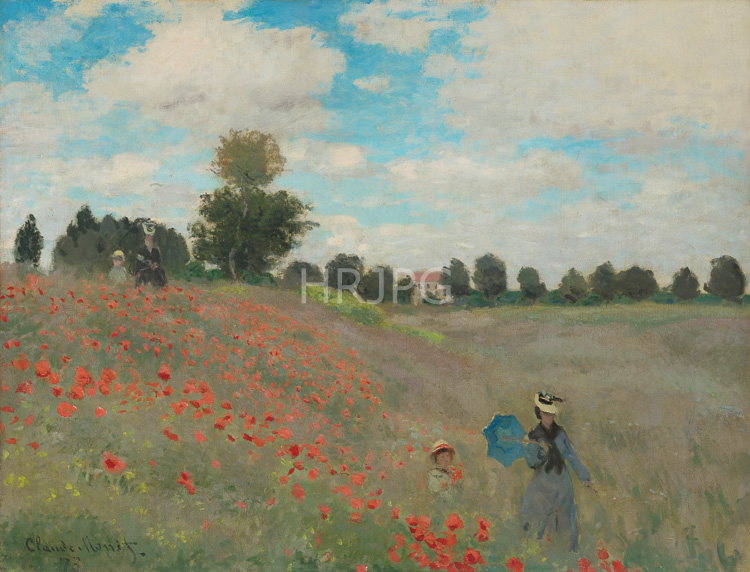
The visual center of the painting is the extraordinary contrast between the brilliant red of the poppies and the lush, varied greens of the meadow grass. Monet utilizes the optical principle of complementary colors to create a sense of shimmering intensity; the red dabs of paint seem to flicker and dance as the viewer’s eye moves across the field. The composition is built on a series of diagonal planes that draw the eye from the figures in the foreground toward another pair of figures on the hill in the background, creating a sense of rhythmic movement and depth. The light is the primary actor in the scene, raking across the field and illuminating the white garments of the strollers, creating a shimmering 'envelope' of air that unifies the entire environment. The sky is a masterclass in atmospheric light, with soft, scudding clouds that suggest a warm, breezy summer day.
Technically, Poppies at Argenteuil showcases Monet’s mastery of 'broken color' and his rejection of traditional detail. The poppies are not individual flowers but rhythmic notes of red pigment, scattered across the canvas to suggest the 'impression' of a bloom rather than its botanical structure. The brushwork is exceptionally light and spontaneous, reflecting the speed required to capture the shifting light before the sun moved. He avoids the use of black, even in the deep shadows beneath the trees on the horizon, opting instead for cool purples and blues to maintain the painting’s overall luminosity. This chromatic approach gives the entire scene a vibrating, lifelike quality that mimics the actual experience of human vision. The figures are integrated into the landscape as optical elements, subject to the same laws of light and atmosphere as the grass and the trees, reinforcing the idea of a harmonious and unified visual world.
Historically, this work was featured in the landmark first Impressionist exhibition of 1874, where it helped define the movement’s aesthetic of light, leisure, and modern life. It reflects the post-war recovery of France and the desire of the Impressionists to find beauty in the contemporary environment of the suburbs. Today, housed in the Musée d'Orsay, Poppies at Argenteuil remains a universal symbol of the beauty of nature and the innocence of the present moment. It serves as a vital document of Monet's creative process and his deep emotional connection to his family and the land. For the viewer, the painting offers a vision of timeless joy and tranquility, capturing the essence of the French summer with a technical brilliance and emotional resonance that has not faded in over a century and a half. It is a masterpiece of light and color that continues to define our understanding of modern art.