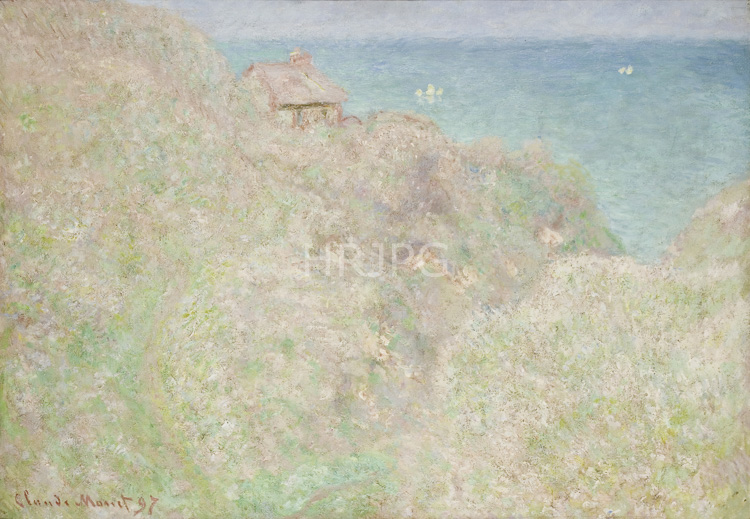
The visual logic of the painting is defined by its extraordinary high horizon and the radical dissolution of the material world into a shimmering field of color. The composition is anchored by the small, humble cabin of the customs officers, which perches precariously on the edge of the rolling green cliffs. Rather than using hard outlines or traditional perspective to define the space, Monet creates a sprawling, immersive field of vision where the foreground cliffs occupy the majority of the canvas. This "all-over" treatment of the vegetation and the rock creates a sense of immense visual texture, leading the eye upward toward the thin, horizontal sliver of the English Channel and the pale morning sky. The cabins provided a crucial structural anchor—a rare human element in an otherwise wild environment—that allowed Monet to measure the shifting depth of the atmosphere as the sunlight filtered through the coastal mist.
For Monet, the true subject of the work was the interaction between the brilliant sunlight and the moisture-laden "envelope" of the Normandy coast. In this 1897 composition, he explores the specific lighting conditions of a high-summer morning, where the sun is so intense it appears to bleach the landscape, turning the cliffs into a pale, iridescent tapestry of color. Monet utilizes a sophisticated and highly restricted palette of soft emeralds, pale azures, and sun-baked ochres to represent this filtered light. The sky is a masterclass in atmospheric observation; it is not a flat blue background but a vibrating field of pale violet and white that suggest the immense heat and humidity of the morning. This creates a unified tonal harmony that makes the atmosphere feel as physical and tangible as the stone cabin itself. The light is the primary actor, transforming the solid topography into a visionary sensation that prefigures the total abstraction of his final years in Giverny.
Technically, The Customs Officer's Cabin at Varengeville showcases Monet’s mastery of "broken color" and a refined, gestural application of paint. He applied the pigment in thick, crusty layers of impasto, building up a textured surface that has a physical weight mirroring the organic life of the cliff side. He famously avoided the use of traditional black, using deep indigos and cool purples in the shadows of the cabin and the recesses of the rocks to maintain a consistent luminosity throughout the entire composition. This technique ensures that the painting maintains a high-keyed vibration, mimicking the actual mechanism of human vision as it adjusts to the glare of a coastal sunrise. The brushwork is exceptionally free, reflecting the speed required to capture the "instantaneity" of the moment before the sun shifted or the mist evaporated. From a distance, these diverse pigments merge in the viewer’s eye, creating a shimmering, lifelike effect that feels as if the air is actually moving and breathing.
Historically, the Varengeville campaign of 1896-1897 represents a vital link in the evolution of modernism. By returning to a subject he had painted decades earlier, Monet demonstrated that the artist's eye was the ultimate subject of the work. The series marked his transition toward a more decorative, tonal style, where the rhythm of the brushstrokes and the harmony of the palette became more important than geographical accuracy. This focus on the sensory "impression" over descriptive record was a radical innovation that paved the way for the non-objective art of the 20th century, influencing everyone from the Fauves to the Abstract Expressionists. Today, versions of the 1897 cabin series are held in major collections such as the Metropolitan Museum of Art, the Art Institute of Chicago, and the Musée d'Orsay. It remains a moving testament to Monet’s unrelenting creative spirit and his ability to see through the material world to find a visionary, eternal light, forever captured through an honest, revolutionary, and deeply patient eye.