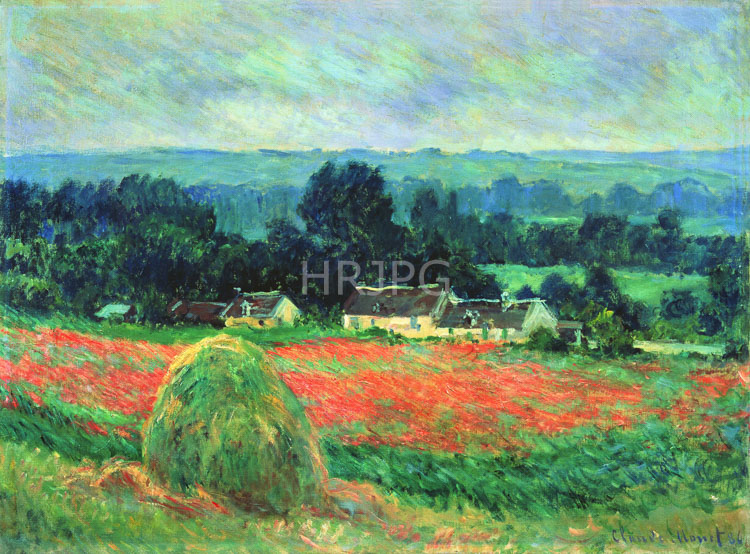
The visual logic of the painting is defined by its extraordinary chromatic contrast and the deliberate layering of the landscape into horizontal bands of intense color. The composition is anchored by the single, massive haystack in the lower-left foreground, which acts as a powerful vertical and sculptural axis. Unlike the later series where the stack often occupies the center, here it is integrated into a wider social and agricultural context. The middle ground is dominated by a breathtaking field of red poppies, rendered with short, staccato brushstrokes of pure vermilion and alizarin crimson that seem to vibrate against the surrounding greens. This field of flowers provides a sense of immense visual energy, leading the viewer’s eye toward the cluster of sun-drenched farmhouses and the dense, vertical screens of trees in the background. The high-angled perspective creates a sprawling, immersive field of vision, balancing the textured mass of the foreground with the fluid, shifting light of the summer sky.
For Monet, the true subject of the painting was never the haystack or the poppies themselves, but the "envelope" (l’enveloppe)—the moisture-laden air and brilliant sunlight that unify the diverse elements of the landscape into a single "impression." In this 1886 composition, he explores the specific lighting conditions of a high summer afternoon, where the sun is at its zenith and the colors are at their most saturated. Monet utilizes a sophisticated and highly vibrant palette of brilliant emeralds, deep cobalts, and fiery reds to represent this atmospheric state. The sky is a masterclass in atmospheric observation; it is not a flat blue background but a tapestry of pale azures and soft ochres that suggest the heat and humidity of the day. This creates a unified tonal harmony that makes the atmosphere feel as physical and tangible as the organic forms of the landscape. The light is the primary actor, raking across the top of the haystack and illuminating the poppy field, transforming a simple agricultural scene into a visionary symphony of pure color.
Technically, Haystack at Giverny showcases Monet’s absolute mastery of "broken color" and a radical rejection of traditional academic chiaroscuro. He applied the paint in thick, rhythmic layers of impasto, particularly in the foreground grass and the texture of the haystack itself, giving the scene a tangible, sculptural presence. He famously avoided the use of flat black, using deep indigos and cool purples in the shadows of the trees and the haystack to maintain a consistent luminosity throughout the entire composition. This technique ensures that the shadows remain "filled with light," mimicking the actual mechanism of human vision as it adjusts to the brilliance of a summer day. The brushwork in the poppy field is exceptionally free and spontaneous, reflecting the speed required to capture the "instantaneity" of the sensory impression before the light shifted. From a distance, these diverse pigments merge in the viewer’s eye, creating a shimmering, lifelike effect that feels as if the air is actually moving and breathing across the field.
Historically, the works produced during the 1886 Giverny campaign represent the bridge between the descriptive Impressionism of Monet’s youth and the visionary, serial practices of his final decades. By focusing on the humble haystack—a symbol of the earth’s bounty and the cycle of the seasons—Monet was engaging in a profound meditation on the resilience of the rural environment. This focus on the sensory impression over topographical record was a radical innovation that paved the way for the total abstraction of the 20th century. This painting illustrates the perfect union between the artist’s eye and the environment he had spent years cultivating and observing. Today, held in major collections such as the Hermitage Museum, Haystack at Giverny remains a beloved icon of modern art, admired for its formal strength and its profound lyrical beauty. It serves as a moving reminder that for Monet, the world was a continuous, shimmering vibration of light, forever captured through an honest, revolutionary, and deeply patient eye.