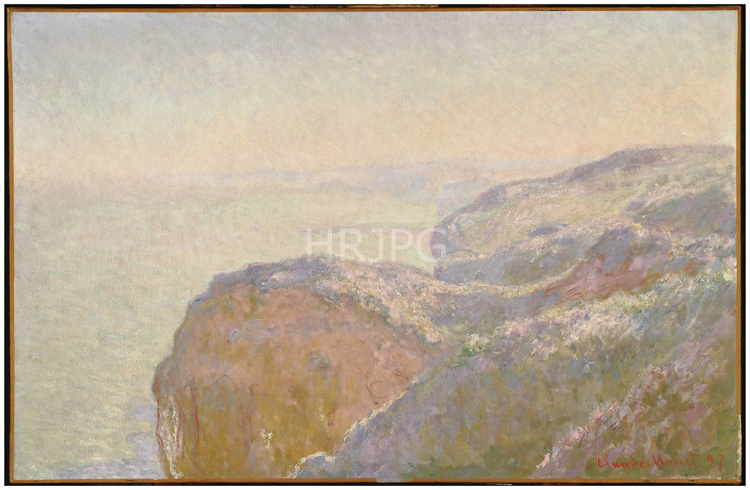
The visual logic of the painting is defined by its sweeping, rhythmic diagonals and the radical softening of boundaries. The composition is anchored by the massive forms of the cliffs on the right, which curve gracefully into the center of the canvas. Rather than using hard outlines or dramatic chiaroscuro to define the edge of the land, Monet utilizes a sophisticated tapestry of pale mauves, soft ochres, and muted greens. This creates a sense of immense volume that remains fundamentally weightless, as if the stone itself is being dissolved by the atmospheric light. The high-angled vantage point, looking across the vast expanse of the English Channel, creates a sprawling field of vision that eliminates the traditional foreground, plunging the viewer directly into the heart of the maritime environment. The horizon line is barely a whisper, a subtle shift in tone that suggests the infinite depth of the space where the sea meets the morning sky.
For Monet, the true subject of the work was the interaction between light and the humid air of the coast. In this 1897 composition, he explores the specific lighting conditions of a hazy morning, where the sun struggles to penetrate a veil of mist. This creates a unified tonal harmony that makes the atmosphere feel as physical and tangible as the earth. Monet utilizes a restricted and highly sophisticated palette of iridescent pastels—lavenders, pale azures, and sun-baked golds—to represent this filtered sunlight. This chromatic approach ensures that the "temps doux" (soft weather) of the morning is depicted not as a static image, but as a vibrating sensation. The light is the primary actor, raking across the cliff tops and illuminating the moisture in the air, transforming the landscape into a visionary symphony of color that prefigures the total abstraction of his final years in Giverny.
Technically, On the Cliff at Dieppe showcases Monet’s mastery of "broken color" and a refined, gestural application of paint. He applied the pigment in short, rhythmic dabs and more fluid, horizontal strokes, building up a textured surface that has a physical presence of its own. He famously avoided the use of traditional black, using deep indigos and cool purples in the shadows to maintain a consistent luminosity throughout the entire composition. This ensures that the shadowed recesses of the cliffs remain "filled with light," mimicking the actual mechanism of human vision as it adjusts to the brilliance of the coastal atmosphere. The brushwork in the sea is exceptionally free, capturing the flickering energy of the water as it reflects the pale sky. From a distance, these diverse pigments merge in the viewer’s eye, creating a shimmering, lifelike effect that feels as if the atmosphere is actually shifting and breathing.
Historically, the Dieppe series of 1897 represents the bridge between the descriptive Impressionism of Monet’s youth and the visionary, serial practices of his late career. By returning to the same locations he had painted fifteen years earlier, Monet demonstrated that the true subject of art was not the place, but the experience of seeing that place at a specific moment in time. This focus on the sensory "impression" over topographical record was a radical innovation that paved the way for the non-objective art of the 20th century. Today, held in the collection of the Musée d'Orsay, On the Cliff at Dieppe remains a beloved icon of modern art, admired for its formal strength and its profound lyrical beauty. It serves as a moving testament to Monet’s unrelenting creative spirit and his ability to see through the material world to find a visionary, eternal light, forever captured through an honest, revolutionary, and deeply patient eye.