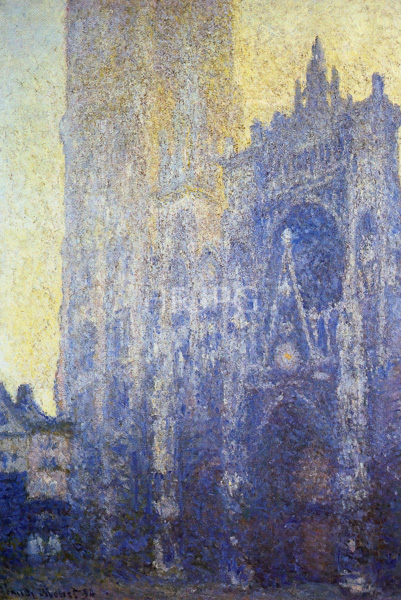
The visual logic of the painting is defined by the extraordinary tension between the massive, vertical structure of the cathedral and the total dissolution of its material form under the influence of the morning sun. Monet adopts a tightly cropped, near-claustrophobic perspective that fills the entire canvas with the portal and its surrounding towers. This "macro" view forces the viewer to confront the surface of the stone as a vibrating field of color rather than a recognizable landmark. The composition is anchored by the rhythmic, vertical recesses of the Gothic arches and the complex tracery of the stonework, which provide a sophisticated grid that suggests immense depth even as the paint surface remains remarkably flat and textured. The high-angled view, looking up at the portal, creates a sense of monumental scale, yet the atmosphere feels intimate and immediate, as if the viewer is standing directly in the cool, blue shadow of the early morning.
For Monet, the true subject of the series was the "envelope" (l’enveloppe)—the atmospheric quality that unifies the facade with the sky. In this "Morning Effect" version, he explores the specific lighting conditions of the early hours, where the deep recesses of the portal are filled with cool, translucent blue and violet shadows. Monet utilizes a sophisticated palette of pale azures, soft lavenders, and sun-drenched ochres to represent the filtered sunlight as it strikes the upper reaches of the towers. The sky is a masterclass in atmospheric observation; it is not a flat background but an active participant in the chromatic vibration of the facade. This creates a unified tonal harmony that makes the air feel as physical and tangible as the stone itself. The "temps frais" (cool weather) of the morning is depicted not as static, but as a shimmering, iridescent veil that makes the solid Gothic architecture appear to breathe and pulse with light.
The technical execution of the Rouen Cathedral series represents a radical departure from the smooth, descriptive finish of traditional landscape painting. Monet applied the paint in thick, crusty layers of impasto, building up a surface that has a physical weight mirroring the masonry of the cathedral. He famously worked on multiple canvases simultaneously, moving from one to another as the light shifted every few minutes. This obsessive process resulted in a surface that is both a record of the artist's visual sensation and a sculptural object in its own right. Crucially, Monet began to adopt a near-total rejection of traditional black; even the deepest shadows in the cavernous portals are filled with saturated indigos and deep purples to maintain a high-keyed luminosity. This technique ensures that the painting maintains a consistent optical vibration, mimicking the actual mechanism of human vision as it perceives the world under the pressure of natural light.
Historically, the works produced during the Rouen campaign were a monumental success when exhibited at the Durand-Ruel gallery in 1895. Critics and fellow artists, including Camille Pissarro and Georges Clemenceau, recognized that Monet had achieved something unprecedented—a way to capture the inexorable passage of time on a static surface. The series served as a vital bridge between the descriptive Impressionism of the 1870s and the visionary abstraction of Monet’s final years in Giverny. By proving that the object was merely a vehicle for light, Monet paved the way for the non-objective art of the 20th century. Today, Rouen Cathedral, the Portal, Morning Effect is admired not just as a record of a French landmark, but as a profound meditation on the limitations of human sight and the infinite beauty of the atmospheric world. It remains a moving testament to Monet’s unrelenting creative spirit and his ability to see through the solid stone to find a visionary, eternal light, forever captured through an honest, revolutionary, and deeply patient eye.