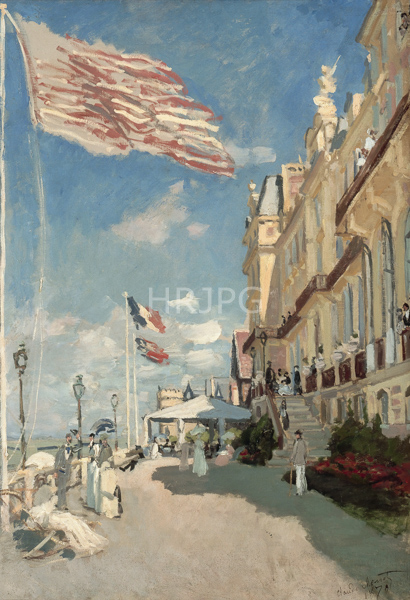
The visual logic of the painting is defined by the extraordinary sense of motion and atmospheric energy created by the tricolor flags that stretch across the sky. Monet utilizes a rapid, gestural brushwork to represent the wind-whipped fabric, which provides a series of vertical and diagonal accents against the expansive horizon. The grand architecture of the hotel is rendered with a soft, atmospheric touch, its massive form simplified into a play of light and shadow. The promenade below is teeming with anonymous figures of the upper-middle class, rendered as small, abbreviated dabs of paint that suggest the rhythmic pulse of the crowd. The light is crisp and directional, reflecting off the pale pavement and the white dresses of the strollers, creating a shimmering 'envelope' of air that makes the scene feel alive and breathing. This elevated vantage point allows Monet to capture the totality of the social and environmental experience.
Technically, Hotel des Roches Noires Trouville showcases Monet’s early mastery of the 'sketch' as a finished work of art. By 1870, he was already moving away from the polished, narrative-driven works of the Salon, prioritizing the sensory 'impression' of a moment. He uses a palette dominated by brilliant whites, cool blues, and the patriotic reds and blues of the flags. The sky is a masterclass in tonal variation, with layers of pale blue and scudding white clouds that suggest the moisture and movement of the maritime air. He avoids hard outlines, relying on the juxtaposition of different color values to define the space and the depth of the receding shoreline. The shadows cast by the figures and the flagpoles are filled with reflected light and cool tones, demonstrating his early commitment to an optical truth that rejected traditional black shadows. This focus on the intangible elements—the wind and the light—was a radical innovation in the history of art.
Historically, this work is a poignant document of a world on the brink of collapse. The flags and the festive atmosphere of Trouville represent the height of French prosperity under Napoleon III, a reality that would be shattered by the impending war. The painting remained in Monet’s personal collection for many years, a record of a happy personal period and a major professional achievement. Today, housed in the Musée d'Orsay, it is admired for its daring composition and its visionary spirit. It serves as a vital link between the social realism of Eugène Boudin and the radical light-studies that would define the rest of Monet's career. It remains a masterpiece of early Impressionism, capturing the heartbeat of a specific time and place with a freshness and honesty that continues to transport the viewer to that windy, sun-drenched promenade of 1870.