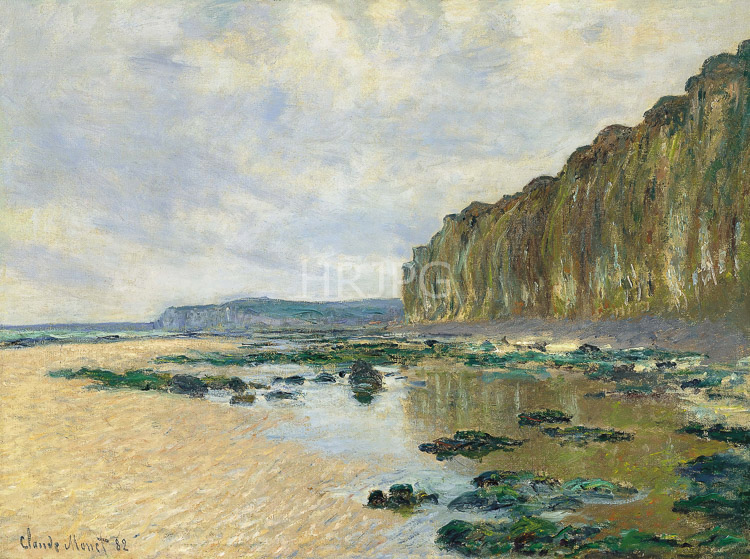
The visual center of the painting is the expansive, undulating surface of the cliff-top meadow, which leads the eye toward the figures and the dizzying drop to the sea below. Monet utilizes a lush and varied palette of vibrant greens, soft violets, and pale yellows to suggest the wind-swept grasses. The sea in the background is rendered as a shimmering expanse of turquoise and cobalt, reflecting the brilliant, high-keyed light of a summer afternoon. The two figures provide a sense of scale and a rhythmic focal point, their wind-whipped dresses and the diagonal of their movement echoing the energy of the coastal breeze. The light is the primary actor, raking across the cliff and creating deep, chromatic shadows that are filled with cool purples and blues. There is no use of black; instead, the depth and form are suggested through the juxtaposition of warm and cool tones, maintaining a consistent luminosity across the entire surface.
Technically, On the Cliff at Pourville showcases Monet’s mastery of 'all-over' texture and the rejection of traditional perspective. He uses a high-angled viewpoint that eliminates the sky almost entirely, focusing the viewer’s attention on the surface of the land and the water. The brushwork is exceptionally free and gestural; he uses short, staccato strokes for the grass and broader, horizontal marks for the sea, creating a vibrating surface that mimics the sensory experience of standing on the precipice. The 'envelope' of air is palpable here; the way the atmosphere blurs the distant horizon and softens the architectural silhouettes of the figures suggests a humid, salt-laden atmosphere. This focus on 'instantaneity'—capturing the visual sensation of a single moment before the wind shifts or the light fades—was the radical innovation that defined his mature style.
Historically, the Pourville series represents the beginning of Monet’s systematic investigation into the landscape through the series method. By returning to these cliffs multiple times, he realized that the 'identity' of the site was a fluid construct, shaped entirely by the light. The work reflects the late 19th-century fascination with the rugged beauty of the French coast, away from the manicured gardens of the city. Today, held in major collections such as the Art Institute of Chicago, the painting is admired for its lyrical beauty and its technical brilliance. It remains a cornerstone of Monet’s legacy, illustrating the perfect union between his revolutionary eye and the natural world he sought to record with such honesty. It serves as a reminder that for Monet, the beauty of the world was to be found in the present moment, captured through the unmediated and vibrant record of light and motion.