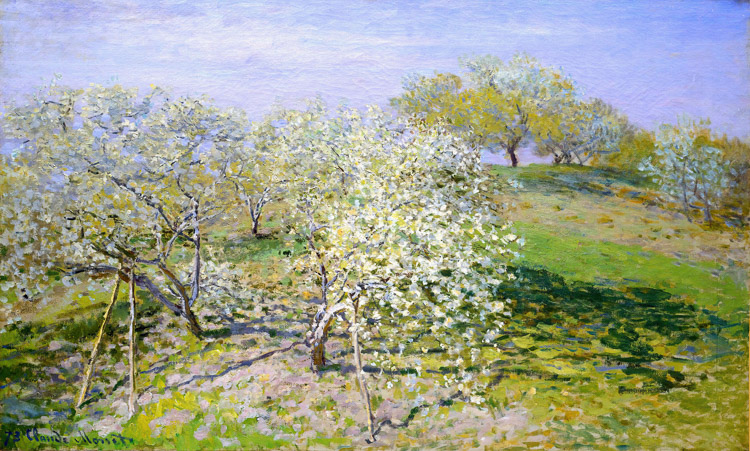
The visual center of the painting is the delicate screen of blossoming trees, which forms a rhythmic pattern across the center of the canvas. Monet utilizes a lush and varied palette of soft pinks, brilliant whites, and fresh emerald greens to suggest the vitality of the spring air. The sunlight filters through the thin branches, dappling the lush grass below and creating a shimmering 'envelope' of light that unifies the trees and the sky. The brushwork is exceptionally light and staccato; he uses small, rhythmic dabs of color to represent the individual blossoms and the rustling leaves. This creates a vibrating surface that mimics the sensory experience of standing in a sun-drenched orchard. The background features a low horizon line with a soft blue sky and scudding white clouds, providing a sense of airy depth and space that invites the viewer into the tranquil scene.
Technically, Apple Trees in Bloom demonstrates Monet’s mastery of 'all-over' color harmony and the rejection of traditional chiaroscuro. He avoids the use of black and earthy browns, opting instead for a range of vibrant, high-keyed tones that reflect the optical truth of a clear spring day. The shadows beneath the trees are not empty spaces of darkness, but are composed of cool purples and blues, reflecting the color of the overhead sky. This chromatic approach ensures that the painting maintains a consistent luminosity across the entire surface. The composition is elegantly balanced, with the vertical trunks of the trees providing a structural rhythm that anchors the fluid, atmospheric treatment of the blossoms. This focus on the sensory 'impression' of the scene—the warmth of the sun and the scent of the flowers—was a radical departure from the static and highly finished landscapes of the Academic tradition.
Historically, the Argenteuil paintings of the early 1870s mark the moment when Impressionism became a unified and revolutionary movement. Apple Trees in Bloom reflects the post-war recovery of France and the desire of the Impressionists to find beauty in the present moment and the local environment. The apple tree, a symbol of agricultural prosperity and domestic peace, was a perfect subject for Monet’s celebratory vision. Today, held in major collections such as the Metropolitan Museum of Art and the Musée d'Orsay, the painting is admired for its freshness and its pioneering spirit. It remains a cornerstone of Monet’s legacy, illustrating the perfect union between his revolutionary eye and the natural world he sought to record. It is a work of enduring charm and visual power, capturing the essence of the French spring with a lightness of touch that continues to captivate viewers over a century and a half later.