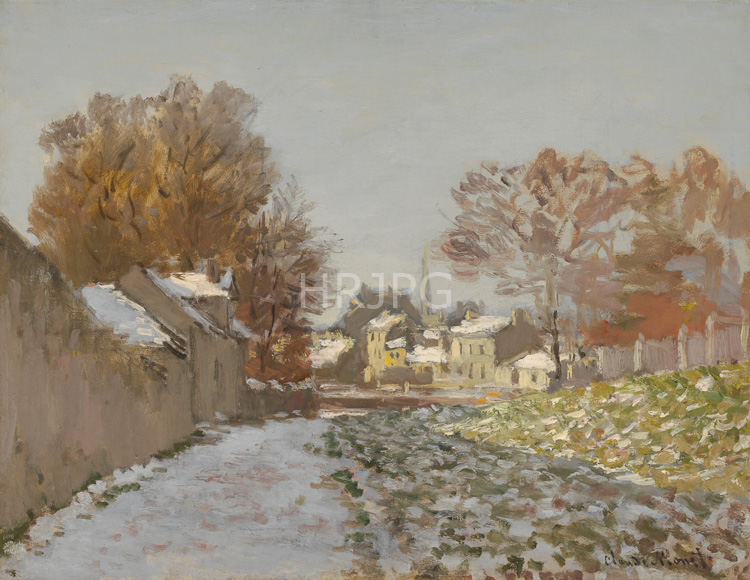
The visual center of the painting is the snow-covered road that recedes into the distance, framed by the dark, skeletal forms of the trees and the silhouettes of the houses. Monet uses a sophisticated palette of pale blues, soft violets, and icy whites to represent the snow, demonstrating how it reflects the color of the overcast sky. The 'blue shadows' across the road were a revolutionary observation; at the time, many critics and the public found the idea of colored shadows unnatural, yet it is an optical truth that the Impressionists championed. The light is diffused and even, creating a unified 'envelope' of cold, damp air that softens the architectural details of the village. The small figures in the distance provide a sense of scale and a human element to the otherwise deserted scene, highlighting the stillness and isolation of a winter day in the suburbs.
Technically, Snow at Argenteuil showcases Monet’s mastery of texture and tonal harmony. He used thick impasto for the heavy drifts of snow on the rooftops and the fences, giving the landscape a tangible, sculptural presence. The brushwork is varied and confident—long, horizontal strokes for the road and more delicate, staccato marks for the bare branches of the trees. He avoids the use of black entirely, opting instead for deep indigos and browns to define the shadows and create a sense of weight. This chromatic approach ensures that the painting maintains a high-keyed luminosity despite its somber palette. The way the mist blurs the background and the sky suggests the moisture-laden atmosphere of a winter afternoon, making the air feel as physical as the ground. This focus on the sensory experience of the cold was a radical innovation in the history of landscape painting.
Historically, the snow scenes of the mid-1870s are among Monet's most successful and influential works. They represent a rejection of the traditional view of winter as a time of death or misery, focusing instead on the unique beauty and optical challenges of the season. Snow at Argenteuil reflects the stability of Monet's life during his years in the suburb, but also his unrelenting commitment to recording the world exactly as he perceived it. Today, held in major collections such as the National Gallery in London and the Musée d'Orsay, the painting is admired for its meditative quality and its technical brilliance. It remains a cornerstone of the Impressionist movement, illustrating the power of the human eye to find a symphony of color in the quietest of moments. It is a masterpiece of light and shadow, capturing the essence of the French winter with a freshness and honesty that continues to resonate over a century later.