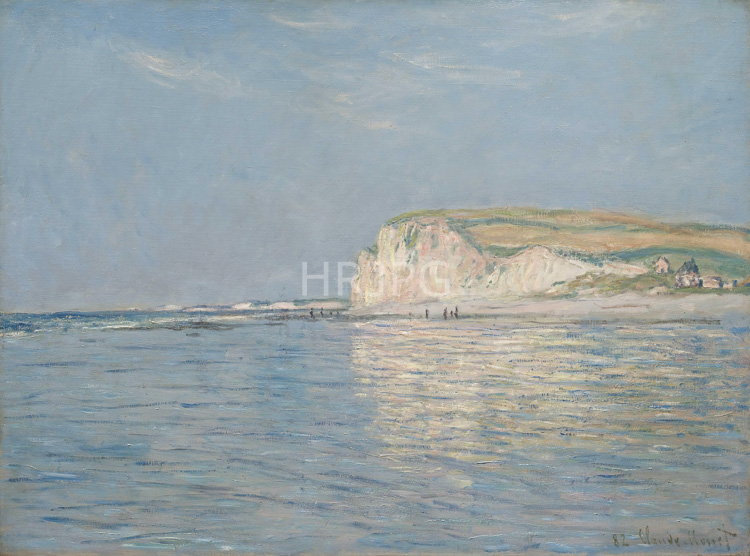
The visual composition is dominated by the horizontal bands of the sea, the wet sand, and the distant cliffs. Monet utilizes a high horizon line to emphasize the expansive foreground of the shore. The palette is sophisticated and airy, filled with pale blues, soft lavenders, and muted ochres. The wet sand is the true star of the work; Monet uses a complex range of colors to suggest its reflective surface, showing how it catches the soft pinks and violets of the afternoon sky. The small, rhythmic brushstrokes represent the ripples left by the retreating water, creating a vibrating surface that leads the eye into the depth of the composition. The distant cliffs are rendered with a soft, atmospheric touch, their forms simplified by the salt-laden mist of the English Channel. This focus on the 'envelope' of air unifies the scene, creating a sense of profound stillness and natural order.
Technically, Low Tide at Pourville showcases Monet’s mastery of texture and light. He uses horizontal, fluid strokes for the sea and more textured, broken marks for the foreground sand and the rocky outcroppings. The shadows are not black or gray, but are composed of cool blues and deep greens, maintaining the painting's overall luminosity. He avoids hard lines, relying on the juxtaposition of different color values to define the boundaries between land and sea. This approach reflects his belief that the eye perceives reality as a series of optical sensations rather than fixed objects. The light is diffused and gentle, suggesting a day of high clouds where the sun is muted, creating a soft, even luminosity that allows the subtle chromatic variations of the beach to shine through. It is a work of immense patience and observation, capturing the quiet dignity of the Normandy shore.
Historically, the paintings of 1882 mark the beginning of Monet’s mature series practice, where he began to realize that the 'identity' of a place was entirely dependent on the shifting light and weather. Pourville remained one of his favorite sites, and his works from this period were successful both critically and commercially. Today, held in major collections like the Cleveland Museum of Art and the Brooklyn Museum, Low Tide at Pourville remains a beloved example of his coastal oeuvre. It serves as a reminder of Monet's deep connection to the French coast and his ability to find monumental beauty in the simple rhythms of the natural world. The legacy of this work lies in its vibrant celebration of the present moment and its profound exploration of the intersection between the earth, the water, and the sky, captured through the honest and unmediated record of light.