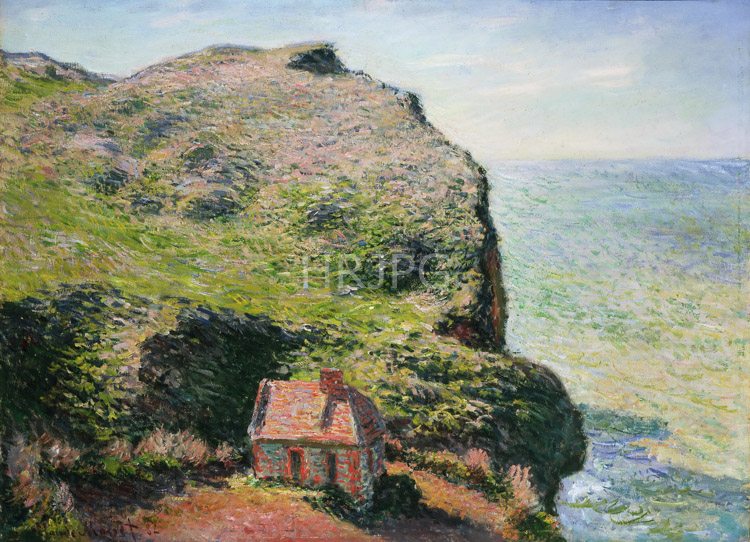
The visual composition is anchored by the modest, terracotta-roofed cabin, which provides a small human element amidst the overwhelming scale of the cliff and the sea. Monet utilizes a high-angled perspective, looking down over the edge of the precipice toward the vast expanse of the English Channel. The color palette is extraordinarily vibrant and saturated; the grass on the cliffside is rendered in brilliant chartreuse and emerald, while the sea below is a complex tapestry of turquoise, cobalt, and pale violet. The sunlight is the primary actor in the scene, raking across the grass and illuminating the side of the cabin, creating deep, chromatic shadows that are filled with cool purples and blues. There is no use of black to define depth; instead, Monet relies entirely on the juxtaposition of warm and cool tones to suggest the three-dimensional form of the landscape and the atmospheric depth of the horizon.
Technically, Customhouse Varengeville showcases Monet’s mastery of 'all-over' texture. He uses short, rhythmic, and gestural brushstrokes to describe the wind-swept grasses and the rugged surface of the cliff. This creates a shimmering effect that mimics the sensory experience of a breezy day by the sea. The water is handled with broader, horizontal strokes that suggest the gentle movement of the tide and the reflection of the clear, blue sky. The 'envelope' of air is palpable here; the way the atmosphere softens the distant horizon and blurs the edges of the cabin suggests a humid, salt-laden atmosphere. Monet’s focus was not on the topographical accuracy of the site, but on the 'instantaneity' of the light—capturing the precise visual sensation of a single moment before the clouds moved or the sun dipped lower in the sky.
Historically, the Varengeville paintings were highly successful when exhibited, cementing Monet’s reputation as the leader of the Impressionist movement who could find poetry in even the most humble structures. The series reflected the late 19th-century fascination with the 'sublime' and the rugged beauty of the French coast, away from the manicured gardens of the city. Today, held in major collections like the Fogg Museum and the Metropolitan Museum of Art, this painting remains a testament to Monet's unrelenting curiosity and his ability to see the world as a kaleidoscope of light. It serves as a bridge between his earlier outdoor observations and the radical abstractions of his final years in Giverny. The legacy of this work lies in its celebration of the solitude and the transformative power of nature, reminding us that the beauty of a landscape is constantly being rewritten by the light that falls upon it.