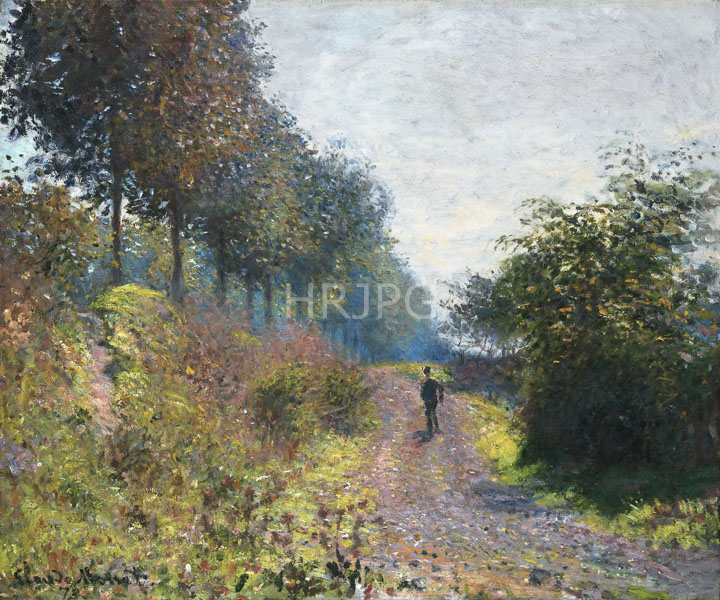
The visual center of the painting is the play of sunlight as it breaks through the foliage to illuminate the path. Monet utilizes a lush and varied palette of vibrant greens, soft ochres, and brilliant whites to suggest the warmth and intensity of a summer afternoon. The composition is built on a gentle diagonal that leads the eye into the depth of the woods, creating a sense of invitation and tranquility. The figures are integrated into the environment with a characteristic Impressionist shorthand; they are not the primary subjects but are treated as optical elements of the landscape, subject to the same laws of light and atmosphere as the trees. The shadows cast by the trees across the path are not dark or empty, but are composed of cool blues and purples, reflecting the color of the clear sky and demonstrating Monet’s rejection of black. This chromatic approach gives the entire scene a shimmering, luminous quality.
Technically, The Sheltered Path showcases Monet’s mastery of texture and broken brushwork. He uses short, rhythmic strokes to describe the rustling leaves and the textured surface of the path, creating a vibrating surface that mimics the sensory experience of the outdoors. The brushwork is exceptionally free and spontaneous, suggesting that the painting was executed quickly to capture the light before the sun shifted. This 'sketch-like' quality was a radical departure from the static and highly finished landscapes of the Academic tradition, asserting that the 'impression' of a moment was a complete work of art. The 'envelope' of warm, dry air is palpable here; the way the atmosphere blurs the distant trees and softens the architectural silhouettes in the background creates a sense of airy depth and space. It is a work of profound observation, where the artist’s eye breaks down the complex scene into a symphony of light and color.
Historically, the works produced in Argenteuil between 1871 and 1878 represent the moment when Impressionism became a unified movement. The Sheltered Path reflects the post-war optimism and prosperity of the early 1870s, celebrating the beauty of the French countryside and the importance of leisure. It challenges the academic hierarchy that prioritized historical or mythological themes, proving that a simple woodland scene is a subject of immense artistic and intellectual weight. Today, held in the collection of the Philadelphia Museum of Art, the painting is admired for its lyrical beauty and its pioneering spirit. It remains a cornerstone of Monet’s legacy, illustrating the perfect union between his revolutionary eye and the world he sought to record. It serves as a reminder that for the Impressionists, the beauty of the world was to be found in the present moment, captured through the honest and unmediated record of light.