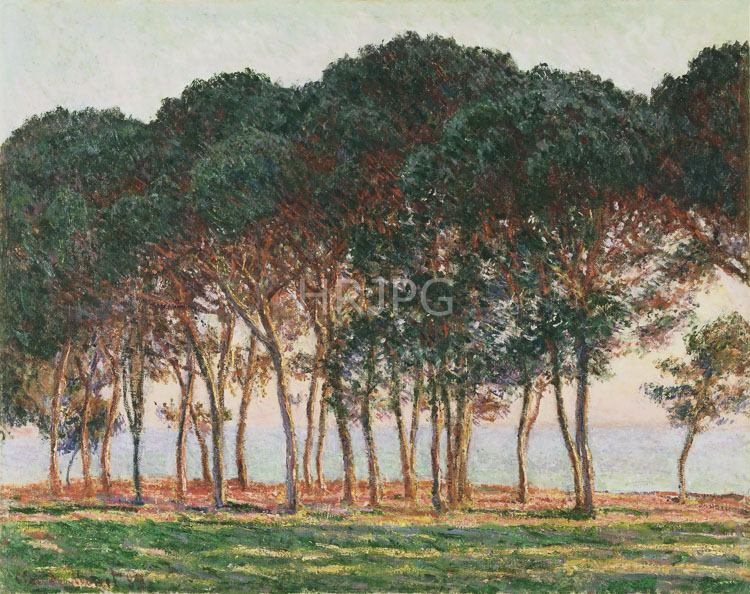
The visual center of the painting is the dramatic contrast between the dark, silhouetted forms of the pine trees and the luminous, sun-drenched sky. Monet uses a daring palette that anticipates the bold, non-naturalistic color choices of the future Fauves. The sky is a masterclass in atmospheric perspective, with layers of pale pink, orange, and soft yellow suggesting the warmth of a Mediterranean sunset. The pine trees are rendered with twisted, energetic brushstrokes that follow their wind-swept forms, their dark green and purple foliage acting as a screen through which the light breaks in brilliant flashes. The ground beneath the trees is filled with deep, cool shadows that contrast sharply with the sunlit areas, creating a visual vibration that mimics the actual sensation of standing in the intense coastal heat. There is no traditional detail in the trees; their forms are suggested by the way they interact with the 'envelope' of light.
Technically, Under the Pines Evening showcases Monet’s mastery of 'broken color' and gestural application. He applied the paint in short, rhythmic dabs and long, sweeping lines, creating a textured surface that has a physical presence of its own. He avoids the use of black, even in the deepest shadows of the grove, using saturated blues and purples to maintain the painting’s luminosity. This focus on the optical truth of a single moment was a radical departure from traditional landscape painting, asserting that the artist’s perception was the ultimate goal of modern art. The composition is elegantly balanced, with the vertical trunks of the pines providing a structural rhythm that anchors the fluid, atmospheric sky. By focusing on the 'vibration' of color rather than the literal description of objects, Monet was pushing the boundaries of what a landscape could convey, moving toward a more subjective and emotional representation of nature.
Historically, the Mediterranean series was a critical triumph for Monet, proving that his Impressionist method was capable of handling the intense light and rugged forms of the South with the same success as the suburban scenes of Argenteuil. Under the Pines Evening reflects the artist’s unrelenting curiosity and his willingness to abandon the familiar in search of a new visual language. Today, held in major collections such as the Philadelphia Museum of Art, the painting is admired for its freshness and its pioneering spirit. It serves as a vital link in Monet’s career, demonstrating his transition from the 'painter of light' to a master of pure, expressive color. The legacy of this work lies in its vibrant celebration of the natural world and its profound exploration of the intersection between the eye, the sun, and the landscape, reminding us of the revolutionary spirit that sought to record the heartbeat of the world through the lens of pure light.