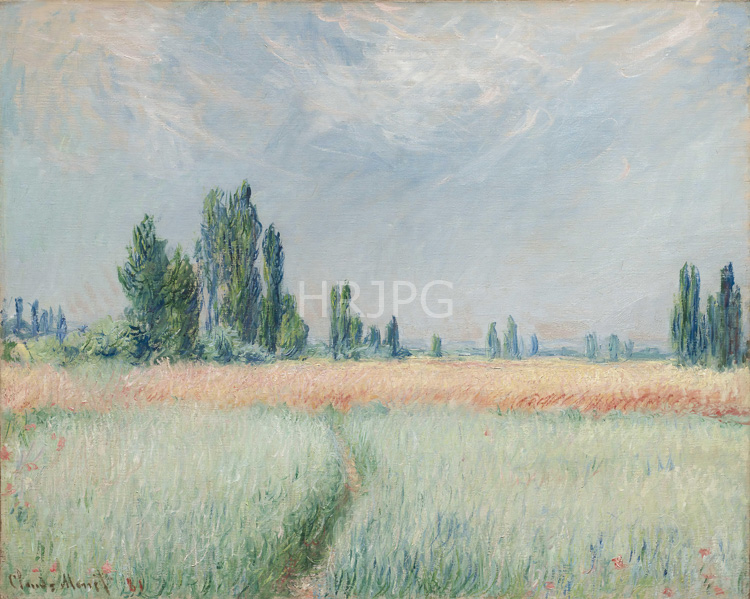
The composition is elegantly organized around the expansive horizontal plane of the wheat field, which takes up more than half of the canvas. Monet utilizes a vibrant and saturated palette of golden yellows, warm ochres, and emerald greens to represent the sun-drenched crops. The brushwork is exceptionally rhythmic and textured; he uses short, staccato strokes to suggest the individual ears of wheat and the way they sway in the summer breeze. This creates a vibrating surface that captures the sensory experience of standing in the intense heat of the field. The screen of dark green trees in the middle ground provides a strong vertical counterpoint to the horizontal sprawl of the wheat, while the pale blue sky, filled with soft, scudding clouds, creates a sense of airy depth and space. The light is the true protagonist of the work, raking across the field and creating subtle tonal shifts that define the contours of the land.
Technically, The Wheat Field demonstrates Monet’s mastery of 'all-over' color harmony and atmospheric perspective. He avoids the use of black and earthy browns, opting instead for a range of vibrant, high-keyed tones that reflect the optical truth of a clear summer day. The shadows within the wheat and under the trees are rendered in deep purples and blues, reflecting the color of the sky and maintaining the painting's overall luminosity. The brushwork is varied and confident, reflecting the 'en plein air' practice of capturing a visual sensation before the light shifts. This focus on the 'envelope' of warm, dry air that unifies the scene is the ultimate fulfillment of the Impressionist ideal. The painting feels like a candid, spontaneous observation, yet it is organized with a sophisticated sense of balance that leads the viewer’s eye through the depth of the landscape toward the distant horizon.
Historically, the landscapes of 1881 represent a period of artistic synthesis for Monet, where he combined his early interest in naturalism with a more mature and decorative approach to composition. The Wheat Field reflects the agricultural prosperity of the French countryside and the artist’s deep connection to the land that sustained him. When these works were exhibited, they were praised for their freshness and their technical virtuosity, solidifying Monet's reputation as the preeminent landscape painter of his generation. Today, held in major collections like the Cleveland Museum of Art, the painting is admired for its lyrical beauty and its profound celebration of the natural world. It remains a testament to Monet's genius in elevating the mundane into the extraordinary, reminding us that for him, the act of seeing was a lifelong adventure, where even a simple field of wheat offered a new opportunity to explore the infinite complexities of light and time.