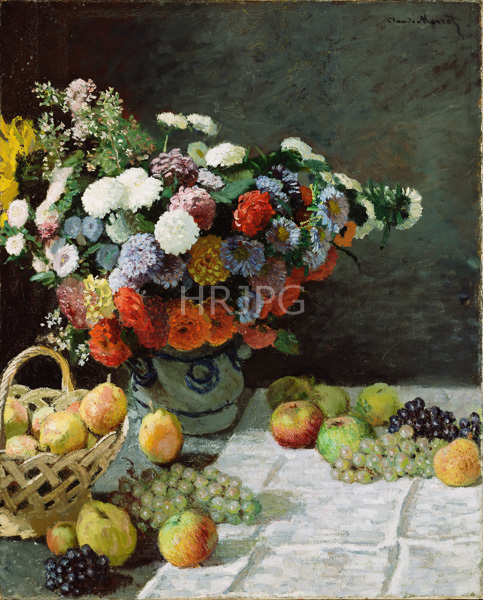
The visual logic of the painting is driven by the sheer variety of organic forms and the complex interplay of colors against a relatively neutral background. Monet treats each element with a distinct textural weight; the heavy, coarse centers of the sunflowers are rendered with thick, tactile brushstrokes that suggest their seed-laden density, while the delicate, translucent skin of the grapes is captured with lighter, more fluid touches. The palette is an orchestration of brilliant yellows, deep magentas, and varied greens, all set against the luminous white of the tablecloth. This white surface acts as a primary stage for the study of light and shadow; Monet captures the way the sunlight bleaches the fabric and how the shadows cast by the fruit are filled with reflected hues rather than flat blacks. The tabletop provides a solid, horizontal anchor for the verticality of the floral arrangement, creating a sense of three-dimensional space and material presence that feels incredibly tangible.
Technically, Flowers and Fruit showcases Monet’s burgeoning fascination with how light penetrates surfaces and defines volume through color rather than line. The fruit is not merely outlined; it is built up through a sophisticated series of tonal shifts and value relationships. The highlights on the apples and the soft sheen of the pears are rendered with a confidence that suggests a deep, early appreciation for the optics of reflection. This work was produced at the same time Monet was painting at La Grenouillère, and one can see a similar freedom in the brushwork here—a move away from the 'licked' finish of the Academy toward a more visceral and immediate application of paint. The composition is deceptively simple but carefully balanced to create a sense of dynamic energy, as if the flowers and fruit have just been placed on the table, still holding the freshness and vitality of the natural world from which they were gathered.
Historically, this painting represents a critical bridge between Monet’s academic training and his emerging obsession with the 'instantaneity' of light. It demonstrates that even within the confines of a traditional still-life arrangement, Monet was primarily interested in the behavior of light as an active, transformative force. The painting was a success for the young artist, showcasing his technical virtuosity and his ability to handle complex color relationships without losing the freshness of the subject. Today, held in the collection of the J. Paul Getty Museum, this work reminds us that Monet’s journey toward abstraction was rooted in a rigorous observation of the material world. It remains a timeless celebration of abundance and the ephemeral beauty of nature, captured with a technical brilliance and emotional resonance that serves as a foundational milestone in the history of modern art. It is a masterpiece of early realism that prefigures the radical shifts of the 1870s.