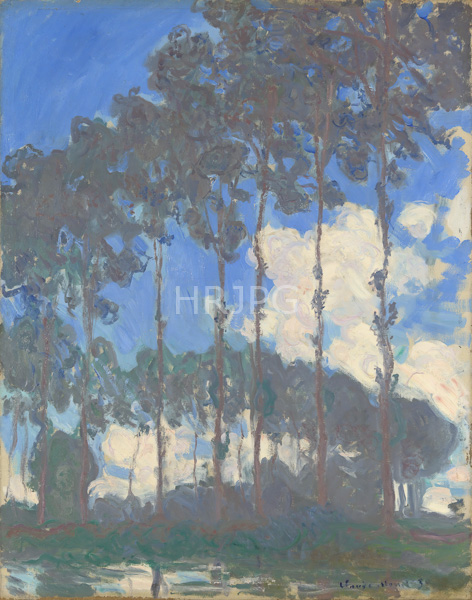
The visual logic of the painting is defined by its extraordinary structural rhythm and decorative quality. The towering, slender trunks of the poplars provide a series of vertical accents that cut across the horizontal planes of the river and the sky. Monet uses a sophisticated zig-zag composition (the 'S-curve') to lead the viewer’s eye from the foreground into the immense depth of the landscape. The palette is dominated by vibrant greens, azure blues, and soft ochres, all unified by the shimmering golden light of the sun. The foliage is rendered with short, rhythmic dabs of color that suggest the rustling of the leaves in the river breeze. The water in the foreground is a masterclass in reflection; the mirror-image of the trees is captured with horizontal strokes that suggest the transparency and movement of the Epte. This symmetry creates a sense of profound harmony and order, reflecting Monet’s interest in the flattened space and decorative patterns of Japanese woodblock prints.
Technically, Poplars on the Banks of the Epte showcases Monet’s mastery of the 'envelope' of light. He worked on multiple canvases simultaneously, moving from one to another as the light changed throughout the day. This dedication to 'instantaneity' allowed him to record the most subtle nuances of the atmosphere—the way the sunlight bleaches the leaves at noon or how the shadows turn violet in the late afternoon. He avoids hard outlines, relying instead on the juxtaposition of different color values to define the forms of the trees and the riverbank. The brushwork is varied and confident, building up a textured surface that reflects the physical reality of the landscape. By focusing on a single subject over an extended period, Monet demonstrated that the true subject of art is not the object itself, but the transformative power of light as it moves through time.
Historically, the Poplar series was a critical and commercial triumph when exhibited at the Durand-Ruel gallery in 1892. It solidified Monet’s reputation as the preeminent landscape painter of his generation and proved that the Impressionist method could be used to create works of monumental structure and decorative beauty. Poplars on the Banks of the Epte remains one of the most iconic images of the French countryside, representing a perfect union between the artist’s eye and the environment he sought to protect and record. Today, held in major institutions like the Tate Modern and the Philadelphia Museum of Art, the painting continues to captivate viewers with its rhythmic energy and its profound celebration of the natural world. It is a cornerstone of his mid-career achievement, illustrating the transition from early Impressionist observation to the visionary series paintings that would define the rest of his life.