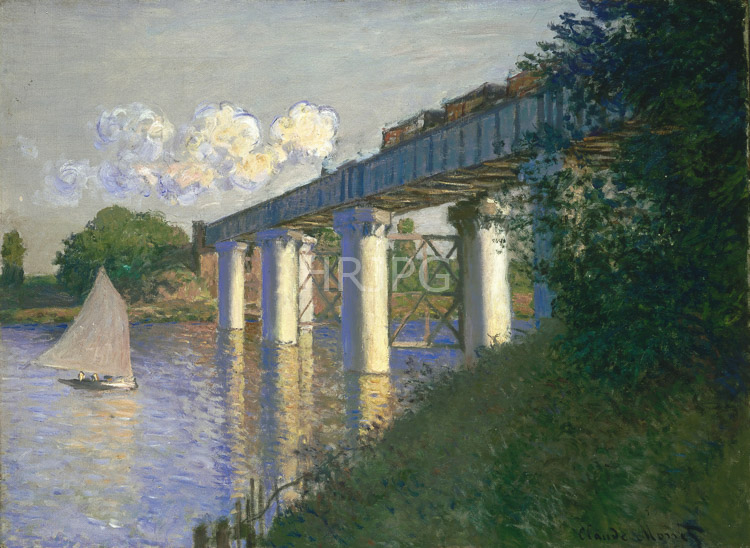
The visual logic of the painting is grounded in the contrast between the solid, vertical piers of the bridge and the fluid, horizontal movement of the river and the steam. Monet utilizes a bright, high-keyed palette of azure blues, brilliant whites, and earthy ochres to suggest a clear, sun-drenched day. The bridge is not rendered as a cold, mechanical object; instead, its iron and stone surfaces are treated as canvases for the play of light and shadow. The steam from the locomotives is a central element, rendered with broad, atmospheric strokes that dissolve the hard edges of the machinery into the soft blue of the sky. This 'shorthand' for industrial smoke was radical, as it treated man-made pollution with the same lyrical intensity as natural clouds. The water in the foreground is a masterclass in Impressionist technique, where short, rhythmic slashes of color represent the flickering reflections of the bridge and the light on the moving current.
Technically, The Railway Bridge at Argenteuil showcases Monet’s mastery of 'all-over' composition and tonal unity. He avoids the use of black, even in the deep shadows beneath the bridge arches, opting for saturated purples and cool greens to suggest depth and volume. This ensures that the painting maintains a consistent luminosity across the entire surface. The brushwork is varied and confident—long, structural strokes define the bridge, while more delicate, staccato marks describe the foliage along the banks and the rippling surface of the Seine. By positioning the viewer at a low angle from the riverbank, Monet emphasizes the monumental scale of the bridge, yet its integration into the environment suggests a peaceful coexistence between technology and nature. The presence of small pleasure boats in the distance further highlights the dual nature of Argenteuil as both an industrial hub and a site of suburban leisure.
Historically, this work is significant for its appearance in the second Impressionist exhibition of 1876. It reflects the post-war recovery of France and the central role of the railway in the nation’s reconstruction and identity. Unlike earlier landscape traditions that ignored or lamented industrial progress, Monet embraced it as a vital part of the contemporary visual experience. Today, housed in the Musée d'Orsay, the painting is admired for its formal clarity and its revolutionary treatment of light. It remains a powerful testament to Monet’s genius in finding beauty in the mundane and the modern, elevating a functional bridge into a complex symphony of color and atmosphere. It is a cornerstone of his Argenteuil period, illustrating the perfect union between his revolutionary eye and the rapidly changing world of the 19th century.