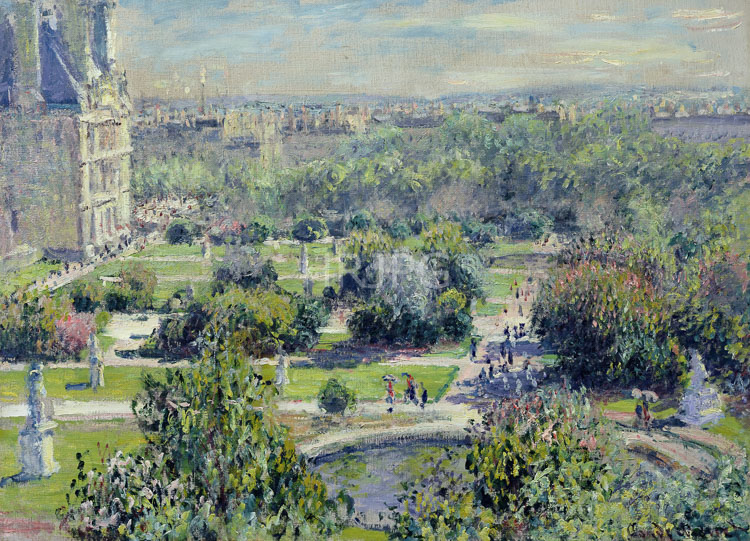
The visual center of the painting is the expansive green landscape of the gardens, which acts as a stage for the anonymous figures of the Parisian public. Monet uses a palette dominated by lush greens, warm ochres, and brilliant whites to suggest the warmth of a spring afternoon. From his elevated vantage point, the figures are reduced to rhythmic dabs of color, their individual identities dissolving into the overall pattern of the crowd. The architectural silhouettes of the Rue de Rivoli and the distant buildings are rendered with a soft, atmospheric touch, creating a sense of immense depth and space. The sunlight filters through the trees, dappling the gravel paths and creating a shimmering, luminous 'envelope' of light that unifies the entire scene. This 'snapshot' quality reflects Monet’s interest in the fleeting nature of modern life, where the movement of the crowd and the shifting sun constantly alter the appearance of the city.
Technically, The Tuileries showcases Monet's mastery of 'all-over' texture and color harmony. The brushwork is varied and confident; he uses short, staccato strokes to describe the flowers and the foliage, while using broader, horizontal marks for the wide paths and the sky. He avoids hard outlines, relying instead on tonal shifts and the juxtaposition of different values to suggest form and perspective. The shadows cast by the trees are filled with cool purples and blues, reflecting the color of the clear sky and demonstrating his rejection of traditional black as a shadow color. This chromatic approach gives the painting its characteristic brightness and energy. By isolating the garden from its wider urban context, Monet creates a sense of a serene, self-contained paradise within the heart of the city, highlighting the role of the park as a place of rest and social interaction.
Historically, this work is significant for its connection to the third Impressionist exhibition of 1877, where Monet's cityscapes were a major feature. It reflects the desire of the Impressionists to move away from the 'grand narratives' of history painting toward a direct, unmediated record of the world as they saw it. The Tuileries Gardens, having been the site of royal power and revolutionary destruction, are here presented as a modern space for everyone. Today, as part of the Musée Marmottan Monet collection, the painting is admired for its lyrical beauty and its technical brilliance. It remains a powerful testament to Monet’s genius in finding monumental beauty in the everyday and elevating a simple park scene into a complex symphony of light and color. It is a cornerstone of his early career, illustrating the perfect union between his revolutionary eye and the modern world he inhabited.