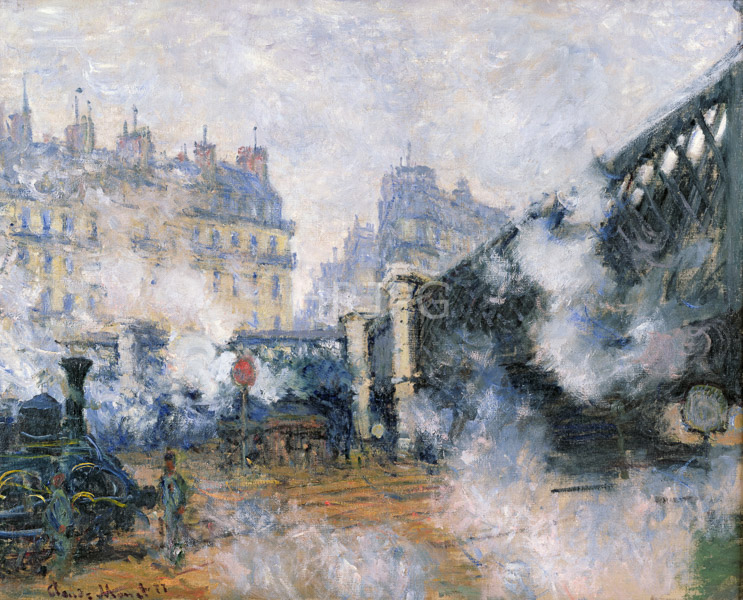
The composition is dominated by the geometric structure of the station’s iron roof and the massive bridge in the background, which provide a strong, modern framework for the scene. However, this architectural solidity is constantly challenged by the billowing clouds of steam and smoke from the locomotives. Monet uses a sophisticated palette of metallic blues, grays, and whites to represent the steam, which catches the light filtering through the glass roof. The figures on the platform and the trains themselves are rendered with a rapid, gestural shorthand, prioritizing their optical presence within the atmosphere over mechanical detail. The contrast between the dark, heavy forms of the iron and the light, ethereal quality of the smoke creates a visual tension that reflects the power of the industrial revolution. This was a radical departure from traditional landscape painting, asserting that the steam engine was as worthy a subject as a mountain or a tree.
Technically, the Saint-Lazare series allowed Monet to explore the 'interpenetration' of light and matter. The smoke is not just a white cloud; it is filled with reflected colors from the locomotives, the sky, and the ironwork. Monet uses a variety of brushstrokes—from broad, atmospheric washes for the sky to thick, textured impasto for the billowing steam—to create a sense of movement and sound. He avoids the use of black, even for the dark iron structures, using deep indigos and browns to suggest weight and shadow. This ensures that the painting maintains a high-keyed, luminous quality even in an industrial setting. The perspective draws the viewer deep into the station, making them feel like a passenger amidst the noise and activity of the platform. This focus on the sensory experience of the city was a hallmark of the Impressionist desire to record the 'heroism of modern life.'
Historically, the Gare Saint-Lazare series marks the point where Monet became the definitive painter of modern Paris. The series was exhibited at the third Impressionist exhibition in 1877, where it was hailed by critics like Georges Rivière for its courage and its technical brilliance. It reflects the post-war recovery of France and the central role of the railway in the nation’s modernization. The Pont de l'Europe remains one of the most iconic images of the 19th-century avant-garde, capturing a moment when the world was changing forever. Today, housed in the Musée d'Orsay, it continues to inspire viewers with its bold composition and its revolutionary treatment of light and atmosphere. It is a work of immense historical and artistic importance, illustrating the transition from the old world to the new, and remains a cornerstone of Monet’s legacy as the pioneer of modern vision.