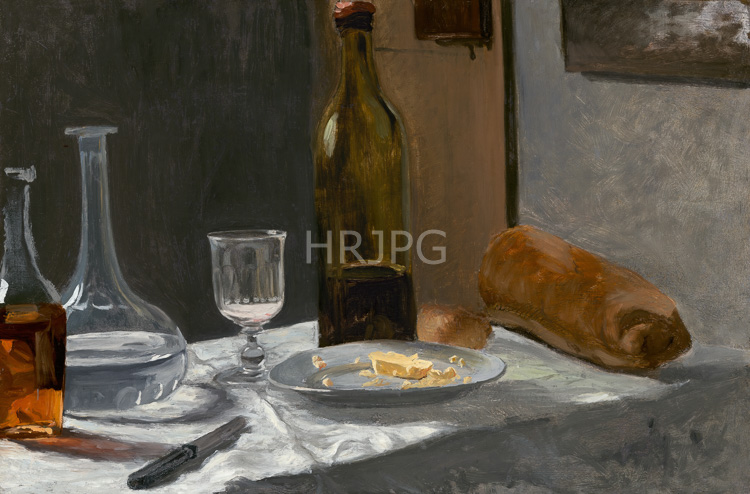
The composition is balanced and classical, featuring an arrangement of domestic objects on a white tablecloth. Monet focuses on the varied textures and material qualities of each item: the transparency and glint of the glass carafe, the dark, reflective surface of the wine bottle, the rough, crusty exterior of the bread, and the weight of the ceramic pitcher. The light enters the scene from the left, casting soft shadows that define the volumes and create a sense of three-dimensional space. Monet’s palette is dominated by earthy, realistic tones—ochres, deep reds, and cool grays—which ground the objects in a tangible reality. The white tablecloth provides a brilliant, luminous surface that reflects the light, a technique that Monet would later expand into his high-keyed snow scenes and landscapes. This early focus on the 'white on white' study prefigures his lifelong quest to understand how light interacts with different surfaces.
Technically, the brushwork in this still life is more controlled and descriptive than the gestural strokes of his later years. However, one can already see a certain freedom in the way he handles the paint, particularly in the highlights on the glass and the textured surface of the bread. He uses small touches of pure color to suggest the reflections of light, avoiding the overly blended, 'licked' finish of the Academic style. The objects are not just outlined; they are built up through a sophisticated understanding of value and tonal relationships. This 'sculptural' approach to painting allows the viewer to feel the weight and presence of each object. By choosing mundane, everyday items rather than rare or precious objects, Monet was already aligning himself with the realist tradition that sought beauty in the common world, a core tenet of the future Impressionist movement.
Historically, Still Life with Bottle Carafe Bread and Wine is important because it proves that Monet’s later radicalism was built on a solid foundation of academic skill. He was a master of the traditional rules before he chose to break them. This work was a critical success in his early years, showing his potential to become a leading painter of his generation. Today, held in the National Gallery of Art in Washington, the painting is admired for its freshness and its quiet, enduring power. It serves as a bridge between the old world of the museum and the new world of modern perception. For the viewer, it offers a moment of simple, sensory pleasure, reminding us that Monet’s journey toward the light began with a deep, humble observation of the world on his own table. It remains a cornerstone of his early oeuvre, illustrating the beginning of a revolutionary career that would forever change the course of Western art.