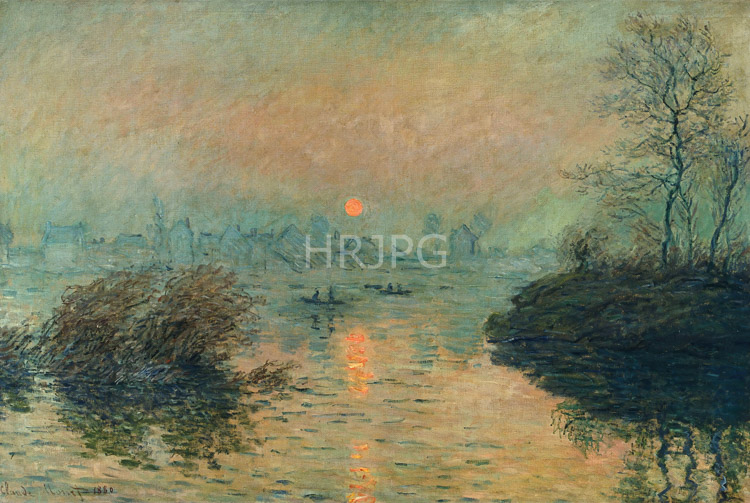
The composition is starkly horizontal, emphasizing the slow, inexorable movement of the ice cakes down the river. The sun, a pale disc of orange and white, is positioned near the center of the horizon, its light reflected in a narrow, shimmering column on the dark, freezing water. Monet uses a restricted but sophisticated palette of icy blues, muted purples, and earthy browns, all unified by the soft, diffused light of the winter atmosphere. The sky is a masterclass in tonal variation, with layers of gray and pale pink suggesting the moisture-laden air of a winter evening. The silhouettes of the distant trees and hills are simplified into soft, blurred shapes, creating a sense of immense depth and cold. This focus on the 'atmosphere' rather than the objects themselves allows the painting to convey the physical sensation of the biting air and the stillness of the landscape.
Technically, Sunset on the Seine Winter Effect demonstrates Monet's interest in the 'series' concept—capturing the same scene under different lighting conditions. The brushwork is vigorous yet controlled; he uses thick impasto for the jagged edges of the floating ice floes, giving them a tangible, sculptural presence. In contrast, the sky and the reflections are handled with smoother, more blended strokes that suggest the transparency of the light. Following his Impressionist principles, Monet avoids the use of black entirely; even the darkest areas of the water are composed of deep indigos and saturated greens. This chromatic approach ensures that the painting remains luminous despite its somber subject matter. The way the light catches the surface of the ice, creating flashes of brilliance amidst the gloom, is a testament to Monet's extraordinary observational skills and his ability to record the 'instantaneity' of nature’s most fleeting effects.
Historically, the 'débâcle' series is seen as a turning point in Monet's career. It marks a transition from the social, leisure-focused landscapes of the 1870s to a more solitary, meditative, and eventually series-driven practice. The harsh winter provided a perfect subject for his exploration of light and form in a landscape that was stripped of color and detail. Today, versions of this work are held in major institutions like the Petit Palais in Paris and the Metropolitan Museum of Art. It remains a powerful example of Monet's resilience and his belief that the artist must confront the world exactly as it is. The painting is a timeless meditation on the cycles of nature—death and rebirth, freezing and thawing—captured with a technical brilliance and emotional resonance that continues to captivate viewers over a century later. It is a masterpiece of light in a lightless time, illustrating the dawn of a new visual language that would prioritize perception over narrative.