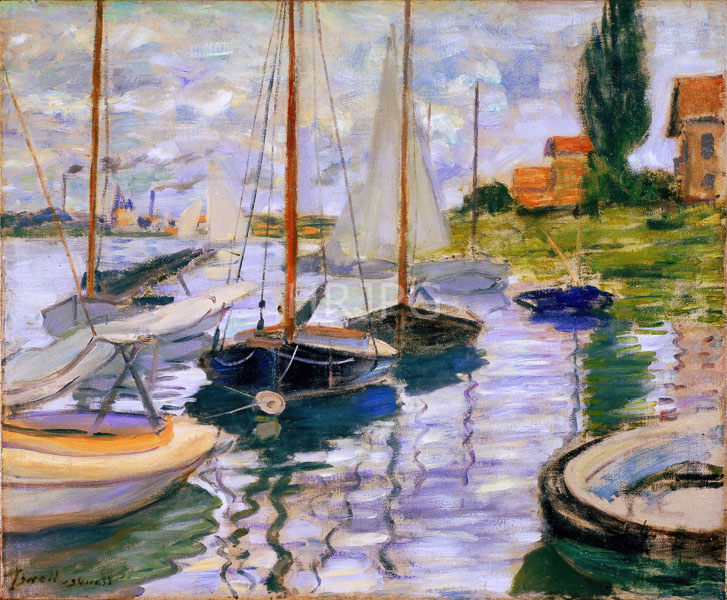
The composition is built upon a dynamic series of diagonals created by the masts and sails of the boats, which cut through the horizontal planes of the river and the distant shoreline. This structural framework gives the painting a sense of energy and upward movement, reflecting the breeze that fills the sails. The water in the foreground is the true star of the show; Monet uses short, rhythmic strokes of pure white, azure, and pale yellow to suggest the choppy, reflective surface of the Seine. These strokes are not blended, allowing the eye of the viewer to perform the 'optical mixing' that creates a sense of sparkling light. The sailboats are rendered with an abbreviated shorthand, their forms suggested by confident dabs of color rather than precise lines, which conveys a sense of speed and transience. The background features the lush greenery of the riverbanks and the distant architecture of Argenteuil, all unified by the brilliant, high-keyed light of the afternoon sun.
Technically, Sailing Boats on the Seine showcases the 'classic' Impressionist palette. Monet avoids the use of black and earthy browns, opting instead for a range of vibrant blues, greens, and yellows. The shadows under the hulls of the boats are rendered in deep indigos and purples, reflecting the color of the sky and the water rather than a mere lack of light. The brushwork is exceptionally free and spontaneous, suggesting that the painting was executed quickly to capture the light before it shifted. This 'sketch-like' finish was highly controversial at the time but is now recognized as a revolutionary attempt to capture the 'instantaneity' of nature. The way the light reflects off the white sails and the surface of the water creates a luminosity that seems to emanate from within the canvas, making the viewer feel the warmth and the movement of the air.
Historically, the Argenteuil period is often cited as the golden age of Impressionism. It was here that Monet, Renoir, and Manet often painted side-by-side, influencing each other’s handling of light and modern subjects. Sailing Boats on the Seine reflects the prosperity and optimism of post-war France, celebrating the simple joys of suburban life. It represents a break from the past, where the 'heroism of modern life' was found not in grand historical events, but in a simple afternoon on the river. Today, housed in the San Francisco Museum of Modern Art, the painting continues to be celebrated for its freshness and its pioneering spirit. It remains a cornerstone of Monet’s legacy, illustrating the moment when he fully realized his vision of a new, modern way of seeing the world through the lens of pure light and color.