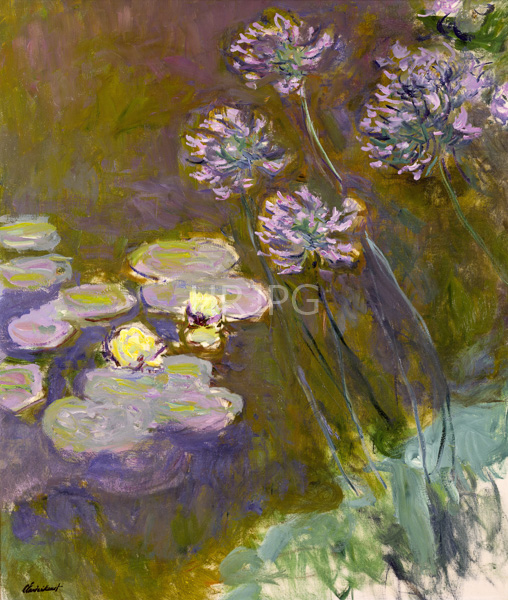
The visual center of the painting is not a single point, but a rhythmic interplay between the solid and the fluid. The agapanthus plants, with their slender stems and clusters of blue-mauve blossoms, act as a rhythmic vertical framing device on the side of the canvas. These flowers anchor the viewer, providing a sense of place before the eye is swept into the infinite depth of the pond. Monet uses a sophisticated palette of deep ultramarine, emerald green, and pale lavender to depict the water, which reflects the overhead sky and the weeping willows that ring the pond. The water lilies themselves are rendered as dabs of brilliant white and rose, floating like ethereal islands on the dark, mirrored surface. There is no horizon line and no sense of a receding ground; the viewer is placed directly within the water’s edge, experiencing the landscape as a total, all-encompassing environment.
Technically, Water Lilies and Agapanthus displays the bold, gestural brushwork that defined Monet’s final decade. Because of his failing eyesight and the sheer scale of the canvases, he used long-handled brushes and applied paint with an energetic, almost desperate vitality. The layers of oil are built up into a rich texture, with 'scumbled' passages where the dry paint drags over the underlying layers to create a shimmering effect. This mastery of 'all-over' composition was a radical departure from 19th-century norms, anticipating the abstract expressionism of the mid-20th century. Monet was no longer just painting a garden; he was painting the experience of light, shadow, and reflection as they moved through time. The agapanthus, which bloom in late summer, provide a specific seasonal note, grounding the visionary abstraction in the real life of his beloved Giverny estate.
Historically, this work is a testament to Monet's resilience and his unwavering commitment to his artistic mission even in the face of old age and the horrors of World War I. He saw his garden as a sanctuary of peace, and his paintings as a gift to a nation in turmoil. The agapanthus series was a precursor to the final installation at the Orangerie, representing a bridge between his smaller studies and the monumental panels. Today, held in the Musée Marmottan Monet in Paris, the work is celebrated for its modernism and its profound lyrical beauty. It remains a cornerstone of 20th-century art, proving that Monet was a pioneer who pushed the boundaries of landscape painting into a new realm of pure sensation and spiritual contemplation. It is a masterpiece of light and life, capturing the eternal cycle of nature with a freshness that remains undimmed by time.