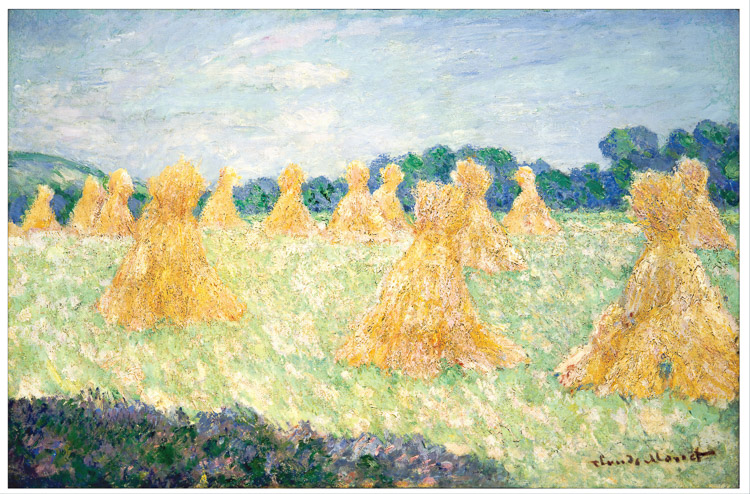
The composition is characterized by a high-keyed luminosity that reflects Monet’s mastery of the 'envelope' of light. The figures of the young ladies are integrated into the meadow with a fluidity that makes them appear as organic parts of the landscape. They are not defined by precise outlines or features; instead, they are rendered as forms of light and color. Their dresses catch the direct sunlight, appearing as brilliant patches of white and pale pink, while the parts of their bodies in shadow are filled with reflected blues and purples. This treatment reflects Monet’s belief that a figure in an outdoor setting is fundamentally different from one in a studio, as it is constantly influenced by the shifting light and the colors of the surrounding environment. The movement of the figures through the tall grass gives the painting a rhythmic, musical quality, suggesting a moment of quiet, suburban bliss.
Technically, the painting is a riot of Impressionist brushwork. Monet uses short, energetic strokes to describe the varied textures of the meadow, creating a vibrating surface that mimics the sensation of heat and light. The palette is dominated by vibrant greens, warm ochres, and flashes of floral color, all unified by the golden glow of the sun. The background trees are rendered with a soft, atmospheric touch, creating a sense of depth and airy space. By 1894, Monet was less interested in the literal details of the scene and more focused on the optical 'vibration' of the atmosphere. This focus on the sensory experience of a moment is what gives the painting its modern, immediate feel. The 'Sun Effect' is not just a lighting condition; it is a transformative force that turns a simple walk into a visionary experience of light and color.
Historically, The Young Ladies of Giverny Sun Effect represents a period of artistic confidence and relative domestic tranquility for Monet. While he was pushing the boundaries of abstraction in his Cathedral series, works like this allowed him to apply his advanced theories of light to more traditional, lyrical subjects. It reflects the influence of the 'series' concept, where the focus is on the specific atmospheric condition of a place at a specific time. This painting is a celebration of Giverny, the place that had become both his home and his open-air studio. Today, it is admired for its freshness and its ability to transport the viewer to a sun-drenched afternoon in the French countryside. It stands as a vital example of Monet's late 19th-century style, where the observation of nature and the expressive power of color are perfectly balanced.