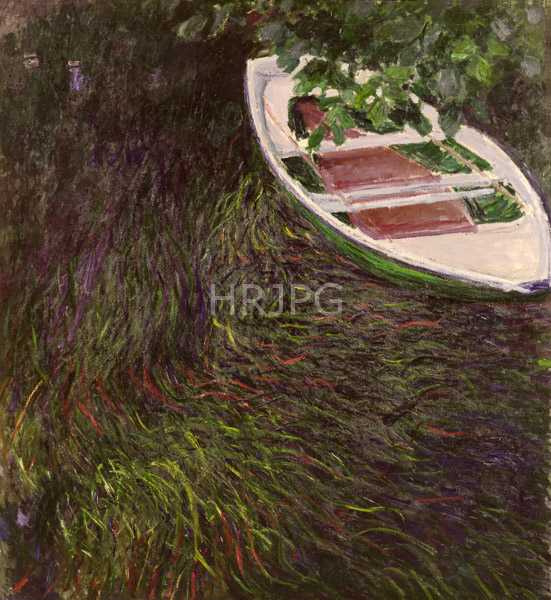
The composition of the painting is strikingly modern, characterized by a steep, high-angled perspective that eliminates the horizon line and the sky. This 'plunging' viewpoint focuses the viewer’s attention entirely on the surface of the river and the diagonal thrust of the boat. Monet uses the boat as a geometric anchor within the fluid, moving environment. The figures, likely Suzanne and Blanche Hoschedé, are rendered with a characteristic Impressionist shorthand, their forms suggested by broad, confident strokes of color rather than detailed anatomical lines. The brilliant sunlight filtering through the overhead trees creates a complex pattern of dappled light across the interior of the boat and the women’s dresses. This interplay of light and shadow is not just a decorative effect; it is the true subject of the work, showing how light fragments solid forms and integrates them into the wider atmosphere.
Technically, The Rowing Boat is a showcase of Monet’s mastery of the 'water-scape.' The surface of the Epte is not a flat plane but a living, moving entity filled with reflections and submerged textures. Monet uses long, rhythmic strokes of emerald green and dark olive to suggest the weeds and water grasses beneath the surface, while horizontal slashes of pale blue and white capture the shimmering reflections of the sky and the sun. This layered approach creates a sense of deep, transparent space within the water. The shadows in this painting are particularly noteworthy; following the Impressionist principle, Monet avoids black, using deep purples and saturated greens to convey depth and cool temperature. The brushwork is vigorous and spontaneous, reflecting the 'en plein air' practice of capturing a visual sensation before the light changes.
Historically, the boating scenes of the late 1880s represent a bridge between Monet's middle period and the radical late series of Water Lilies. They reveal his growing interest in Japanese prints (Ukiyo-e), evident in the unusual cropping and the focus on the decorative patterns created by nature. By isolating the boat within the frame of the water, Monet creates a sense of profound immersion and tranquility. This painting reflects the domestic stability he found in Giverny, yet it remains artistically experimental, pushing the boundaries of what a landscape could convey. Today, held in the collection of the Musée d'Orsay, The Rowing Boat remains a testament to Monet's ability to find monumental beauty in a simple, everyday scene of suburban leisure. It serves as a reminder that for Monet, the act of seeing was a lifelong adventure, where every ripple on the water offered a new opportunity to explore the infinite complexities of light.