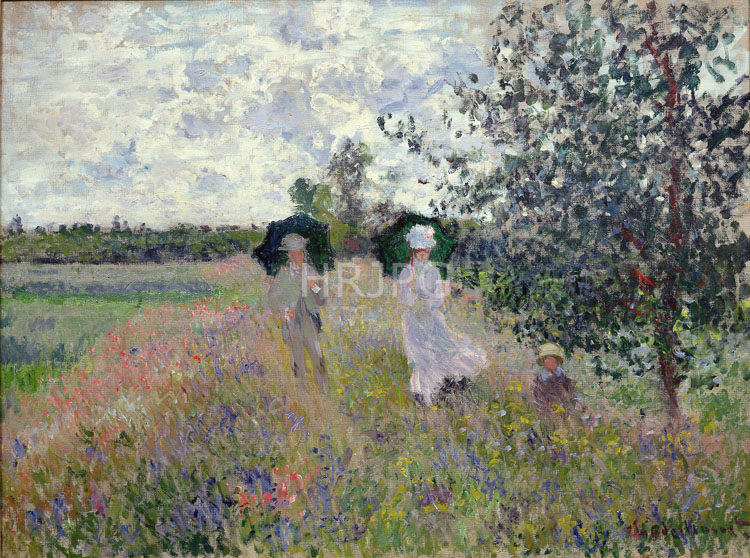
The composition is masterfully organized around a gentle diagonal path that leads the viewer’s eye from the foreground into the lush, green middle ground. The figures are integrated into the landscape rather than standing apart from it, a hallmark of Monet’s philosophy where human beings are subject to the same atmospheric laws as the trees and grass. The sunlight in this work is palpable; Monet uses a palette dominated by vibrant greens, soft pinks, and brilliant whites to suggest the warmth of a spring or summer afternoon. The sky is filled with scudding, white clouds that reflect the light, rendered with broad, horizontal strokes that create a sense of airy depth. The shadows across the grass are not flat or dark but are composed of cool blues and purples, reflecting the color of the sky and demonstrating Monet’s rejection of black as a shadow color. This chromatic approach gives the entire scene a shimmering, luminous quality that captures the essence of a specific moment in time.
Technically, The Promenade near Argenteuil showcases Monet’s increasingly bold and broken brushwork. He uses short, staccato strokes to describe the varied textures of the meadow flowers and the foliage of the trees. This technique allows the eye to 'mix' the colors at a distance, creating a more vibrant and lifelike impression than traditional blending. The water of the Seine, visible in the distance, is captured with horizontal slashes of blue and white, suggesting the gentle ripple of the current. The figures are rendered with an abbreviated shorthand—a few confident strokes define Camille’s parasol and Jean’s small frame—prioritizing their optical presence over anatomical detail. This focus on the 'impression' of the scene allows the painting to breathe, conveying the rustle of the wind and the warmth of the sun in a way that feels incredibly modern and immediate.
Historically, the Argenteuil period represents the moment when Impressionism became a unified movement. The town was a hub for artists like Renoir, Sisley, and Manet, who often painted side by side, influencing each other’s handling of light and subject matter. The Promenade near Argenteuil reflects the post-war optimism of the early 1870s, celebrating the simple joys of suburban life and the beauty of the French countryside. It challenges the academic hierarchy that prioritized historical and mythological subjects, asserting that a simple walk in the park is a subject worthy of monumental artistic consideration. Today, housed in the Musée d'Orsay, it remains a testament to Monet’s genius in elevating the mundane into the extraordinary. The painting continues to resonate with audiences for its freshness, its vibrant celebration of the natural world, and its enduring record of a peaceful moment in a rapidly changing world.