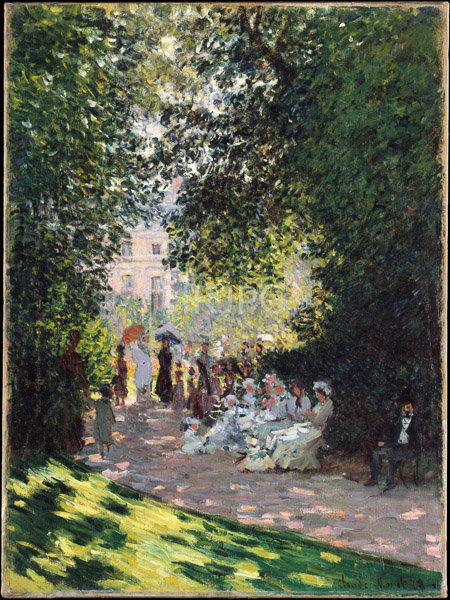
The visual center of the painting is not a single figure or object, but the dappled light that dances across the lush green grass. Monet utilizes a varied palette of emerald, chartreuse, and pale yellow to suggest the different intensities of sunlight filtering through the canopy of trees. The figures in the middle ground are rendered with a characteristic Impressionist shorthand; they are defined not by their features, but by the way their colorful garments catch the light. A woman in a brilliant white dress acts as a focal point, echoing the technique Monet used in his earlier 'Woman in the Garden' series. The shadows cast by the trees are not empty spaces of darkness but are filled with cool purples and deep blues, reflecting the color of the overhead sky. This rejection of black in the shadows was a radical departure from the academic tradition and is a hallmark of Monet's mature style.
The composition is characterized by its immersive quality. The viewer is positioned as if they are standing on the path, looking into the depth of the park. The massive, dark trunks of the trees on the right provide a structural anchor, contrasting with the airy, light-filled spaces on the left. Monet’s brushwork is energetic and textured, with thick applications of paint (impasto) used to suggest the rustling leaves and the tactile quality of the grass. This focus on texture and light over minute detail was intended to record the 'impression' of the scene—the sensory experience of a specific moment in time. The painting captures the fleeting nature of a spring or summer day, where the movement of the clouds and the shifting sun constantly alter the appearance of the landscape.
Historically, the paintings of Parc Monceau represent Monet’s engagement with the 'haussmannization' of Paris—the massive urban renewal project that created new parks and boulevards for the public. While many artists focused on the architecture of the city, Monet was drawn to the green lungs of the metropolis, where nature and modernity met. This work reflects the prosperity and leisure of the era, yet it remains firmly rooted in Monet's personal obsession with the optics of the natural world. Today, housed in the Metropolitan Museum of Art, At the Parc Monceau remains one of the most beloved examples of Monet's urban landscapes. It serves as a reminder of his ability to find profound beauty in the everyday and to elevate a simple park scene into a complex symphony of light and color that continues to inspire viewers over a century later.