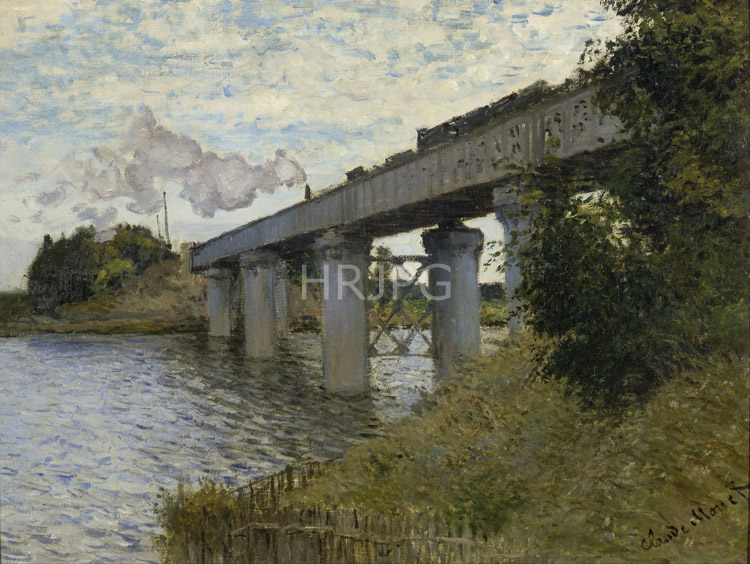
The painting is built upon a sophisticated structural framework. The heavy, vertical piers of the bridge and its strong horizontal span create a rigid geometry that contrasts with the fluid, organic movement of the water and the trees. Monet uses this structure to organize the scene, but he softens its industrial harshness through his delicate treatment of light and atmosphere. The water in the foreground is a masterclass in Impressionist technique; small, horizontal strokes of blue, white, and ochre capture the shimmering reflections of the bridge and the sky. The steam from the train is rendered as a soft, ethereal cloud that dissolves into the pale blue sky, blurring the line between the man-made and the natural. This interplay between the solid, permanent structure of the bridge and the fleeting, transient effects of the steam and the reflections is the central theme of the work.
Technically, The Railroad Bridge in Argenteuil showcases Monet’s interest in the 'envelope' of light—the atmospheric conditions that unify a scene. The colors are bright and fresh, reflecting a clear, sunny day. Monet avoids the use of black, even in the shadows of the bridge, opting instead for deep blues and earthy browns to suggest depth and volume. The brushwork is varied, with broader strokes used for the sky and more detailed, staccato marks used to describe the foliage and the rippling surface of the river. This variety of texture gives the painting a sense of liveliness and movement. The presence of two small figures in a sailboat near the bridge adds a human element to the scene, highlighting the coexistence of traditional leisure activities and the fast-paced world of the modern railway. It reflects the reality of life in the 1870s, where the city and the country were becoming increasingly intertwined.
The historical significance of this painting lies in its rejection of the romanticized landscape. Unlike earlier generations of painters who ignored the signs of industry, Monet embraced them as part of the visual truth of his time. The Railroad Bridge in Argenteuil is a celebration of the dynamic energy of modern France. It also reflects the technical progress of the era; the bridge itself was a symbol of national recovery, having been destroyed during the war and quickly rebuilt. By painting it, Monet was documenting the resilience and modernization of his country. Today, the work is seen as a crucial link in the development of modern art, demonstrating how the Impressionists found beauty in the mundane and the industrial. It remains one of the most iconic images of Argenteuil, capturing a specific moment in history when the old world and the new world met on the banks of the Seine.