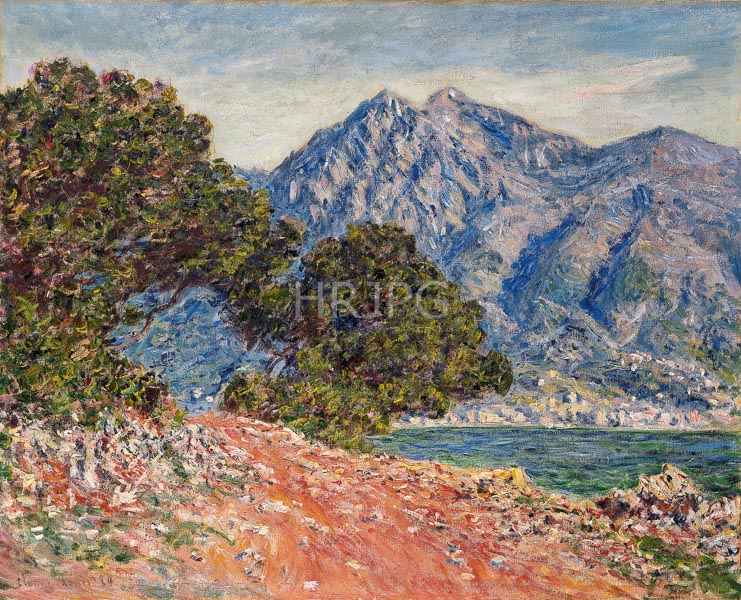
The composition is dominated by the dynamic contrast between the organic forms of the Aleppo pines in the foreground and the expansive, horizontal reach of the sea and sky. The trees are rendered with twisted, energetic brushstrokes that reflect the wind-swept nature of the coast. Their dark, vibrant green foliage acts as a silhouette against the luminous, shimmering water. Monet uses a sophisticated range of blues—from deep ultramarine to pale azure—to depict the Mediterranean, capturing the way the water reflects the brilliant light of the midday sun. The path winding through the foreground provides a sense of perspective and invites the viewer into the scene, while the distant mountains, shrouded in a soft violet haze, add a sense of depth and atmospheric scale. The interplay of warm and cool tones creates a visual vibration that mimics the actual sensation of standing in the intense coastal heat.
Technically, Cap Martin showcases Monet’s mastery of 'broken color.' Instead of blending his paints on the palette, he applied small strokes of pure color directly to the canvas, allowing the viewer's eye to mix them at a distance. This technique creates a sense of shimmering movement, particularly in the water and the sky. The sunlight hitting the tree trunks is rendered in flashes of ochre and white, while the shadows beneath the pines are filled with deep purples and blues. This rejection of traditional chiaroscuro in favor of color-based shadows was a hallmark of his mature style. The brushwork is vigorous and confident, reflecting the excitement Monet felt in the face of this new, vibrant environment. He wrote to his companion Alice Hoschedé about the difficulty of capturing these colors, stating that he needed 'a palette of diamonds and precious stones' to do justice to the scene.
The historical significance of Monet’s Mediterranean period lies in its influence on the future of color in modern art. The works he produced at Cap Martin and Bordighera anticipate the bold, non-naturalistic color choices of the Fauves in the early 20th century. By prioritizing the emotional and optical impact of color over descriptive accuracy, Monet was pushing the boundaries of what a landscape could be. Cap Martin remains a testament to his unrelenting curiosity and his willingness to abandon the familiar in search of a new visual language. Today, this painting is admired for its freshness and its ability to transport the viewer to the sun-drenched shores of the French Riviera. It stands as a vital link in Monet’s career, demonstrating his transition from the 'painter of light' to a master of pure, expressive color, setting the stage for his final, monumental works in Giverny.