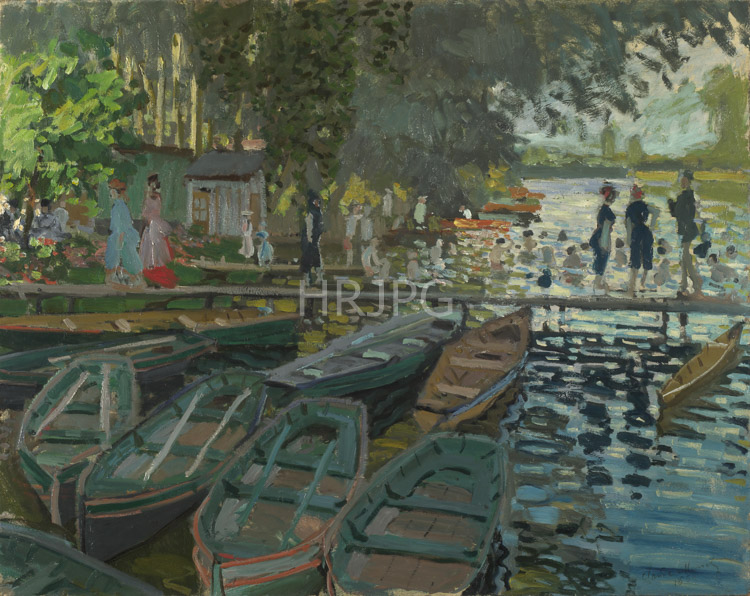
The focal point of the painting is the "camembert," a small circular island connected to the shore by narrow gangplanks. Figures in contemporary dress are gathered on this island, their forms rendered with quick, gestural strokes that suggest movement and social buzz. However, the true protagonist of the painting is the water. Monet uses bold slashes of white, blue, and dark green to represent the reflections of the sky and the bathers on the choppy surface of the river. This "shorthand" for water was revolutionary; rather than blending the colors to create a smooth surface, Monet leaves the brushstrokes visible, allowing the viewer's eye to mix the colors at a distance. This technique captures the vibrant, flickering quality of light on moving water in a way that had never been achieved before. The shadows under the gangplanks and the boats are not empty voids but are filled with reflected light and color, showcasing Monet's keen observational skills.
The composition is dynamic and immersive. The rowboats in the foreground provide a sense of scale and lead the eye into the middle ground where the activity is concentrated. The dense foliage in the background is painted with a variety of green tones, creating a lush wall of color that contrasts with the bright, reflective surface of the Seine. Monet’s palette is bright and fresh, reflecting the outdoor atmosphere and the joy of a summer day. By choosing a site of popular recreation, Monet was also making a statement about the subjects suitable for modern art. He was moving away from historical or mythological themes toward the "heroism of modern life," as championed by Baudelaire. The painting feels like a snapshot—a fleeting moment caught in time—which aligns with the Impressionist desire to record the "impression" of a scene before the light changes.
While Bathers at La Grenouillere was originally intended as a sketch or "pochade" for a larger, more finished work that Monet hoped to submit to the Salon, it is now celebrated as a finished masterpiece in its own right. The spontaneity and energy of the brushwork give the painting a modern vitality that a more polished studio work might have lacked. It marks the moment when Monet fully embraced the potential of the sketch-like finish as a legitimate artistic end. The legacy of this painting is immeasurable; it paved the way for the first Impressionist exhibition in 1874 and established the visual vocabulary that would define the movement for decades. Housed today in the Metropolitan Museum of Art, it continues to captivate viewers with its radical simplicity and its enduring celebration of light, water, and the fleeting pleasures of the modern world.